Quick and Easy Salsa

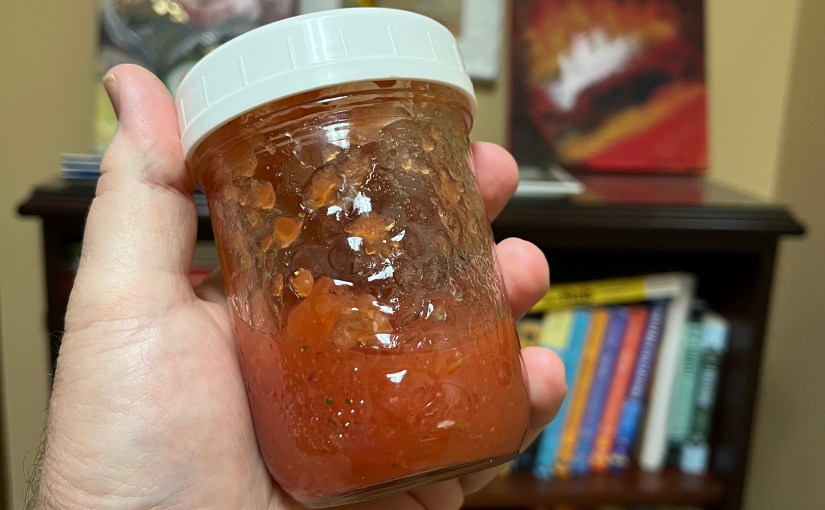
Today for lunch, my daughter Olivia and I are having taco salad with homemade leftover salsa that I whipped up last night. My son Nick is in Atlanta on a video/photo shoot and is probably going to eat somewhere fancy, but I doubt it will top our lunch because this quick and easy homemade salsa is even better the second day than it was last night.

Speaking of last night, we had a bit of confusion about dinner. I had told Nick I would make spaghetti sauce this week and sent him to the store for groceries, but I forgot I had told Olivia we could have taco salad. Nick purchased groceries for sauce but had did not get salsa, of course, and we did not have any on hand. So, I pulled a can of diced tomatoes from the groceries Nick had purchased for spaghetti sauce and then went to the pantry to see what else I could find to save a trip back to the store for salsa. In the process, I came up with this “quick and easy” salsa.

Prep time: 10 minutes/Feeds: 2 to 5

10-ounce can diced tomatoes with chilies (mild or hot)
14.5-ounce can diced tomatoes
Half a chopped onion (I had a red onion at the house, but I think a white onion would be better.)
1 or 2 garlic cloves or a teaspoon (more or less) of ready-to-use minced garlic
Cilantro to taste (We had dried, but fresh cilantro would kick the flavor up a notch.)
Juice from a lime or 2 tablespoons of bottled lime juice  (I did not have a lime and did not measure the bottle lime. I just eyeballed it. Use enough to give the salsa a touch of citrus.) 
 

Blend to desired consistency with a food processor or hand emulsion blender.

It is that simple! And it really is tasty.

The next time you forget the salsa or if you just feel adventurous, open the cabinet and put this homemade salsa together. Experiment with your favorite ingredients. You might never go back to store bought salsa again.

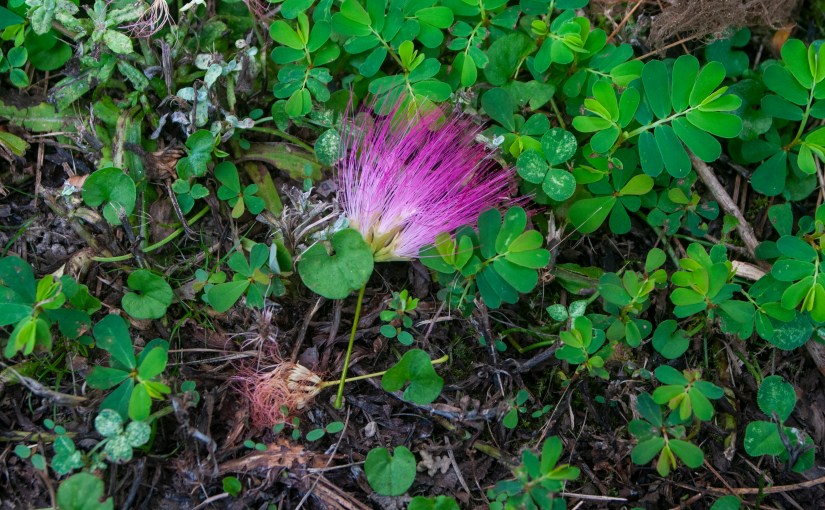
Mimosa Trees

(Photo Credit: Nick Rizzo, nickphotographics.myportfolio.com)

As told by my mother, Betty Burton Rizzo

My Uncle Edgar Morgan got hurt working in the coal mine. He was actually my father’s uncle, which made him my grand uncle. He and Aunt Martha lived in the town of West Jefferson. They had several daughters, Joy, Faye, Joanne, Marie, and Carol Jane. Marie was about my age. We were probably in the fourth grade when Uncle Edgar was hurt. He broke his back and was in the hospital for a long time. When he came home, he was confined to a hospital bed and wheelchair. 

I remember going to visit him after his accident. Of course, I had been around them before, but this was my first time to go to their house in West Jefferson. Along with me were my two baby brothers Floyd and Lloyd, my mama and my daddy, Granddaddy and Granny Burton, and my daddy’s younger sister Helen Burton. Uncle Edgar was Granny Burton’s brother. My granddaddy and granny didn’t have a car for a while, so my daddy drove them.  

That was the first time I or any of the rest of us, for that matter, had ever seen anything like the tree in their front yard. It was glorious. It was bushy. It had a base and then limbs branched out with these pretty pink fuzzy blooms on them. We had never seen anything like it! We all liked it. Aunt Martha said it was a mimosa tree. (I think it has a Japanese origin.) Granny was always getting cuttings off everything, so she and Mother got cuttings from the tree and rooted them. 

Mama set one out in the front yard. It grew and was so pretty. Then after a while, mimosa trees just sprouted up everywhere. They tried to trim them down. But they kept coming up and coming up. They tried to get rid of them but couldn’t get rid of them. They just kept getting in everywhere. 

Granny already had kudzu, another invasive plant from Asia, in her backyard that would start growing before the grass got high enough to be mowed. She also had a scuppernong vine that the kudzu would get intertwined with. Then she planted two mimosa trees in the backyard. The mimosa trees spread at my granny’s like they did at our house, so they came up in the scuppernong vine also. They tried to cut the kudzu and mimosa trees out of the scuppernong, but they could hardly cut anything without cutting the good scuppernong vine also. 

My daddy finally cut down the tree in our front yard. But that didn’t kill it. It kept sprouting from the stump. I especially remember how Mother fought the tree stump because it kept sprouting up again, so she kept trying to kill the stump with anything that she had that she could. Anything like hot grease or hot water or anything that had lye or something in it, she’d go out there and pour it on the stump. But it still just kept growing and growing and growing till finally she killed it enough to the point that they could take it out of the ground with a tractor. We didn’t have big equipment, just the little red and white Ford garden tractor. But Mother had finally managed to get it to the point they could pull the roots and everything out of the ground. But it took years to get it to that point.

Now almost eighty years later, mimosa trees grow all over this area. When we moved here, we moved into almost a wilderness area that had no mimosa trees. We lived in the woods like Little House on the Prairie, so I figure that it’s the cuttings Granny and Mother got from Aunt Martha that are responsible for all of these Mimosa trees around us.

I think there’s a spiritual lesson here. Sin may look beautiful at first. It’s enticing, so much so that you bring it home and make a place for it. You even cultivate it. But then when it starts to take root, it’s hard to get rid of it. And even if you do get your life right with God, what you bring into your life you also bring into your family. Just like the mimosa trees that are all over this area now, you could be letting something take root that will be a problem for your family for generations. So if you see a mimosa tree, leave it where it is. And when you’re tempted to bring sin into your life, no matter how appealing, leave it alone too!

It’s Your Time To Pray

As told by my mother, Betty Burton Rizzo

I was a little girl of only five years old. I had not started school yet. I had a father and a mother and twin brothers who were seven months old. I was happy with my family and loved them very much, and they loved me.

My parents had been Christians all my life. I never knew any kind of life except going to church regularly with my parents and grandparents. All my life my parents taught me the Word of God. The first book I ever owned was a Bible storybook. My parents read me stories from the book and every night had family prayer. My mother or father would say, “It’s your time to pray.” 

And then I would begin to pray: “Now I lay me down to sleep; I pray the Lord my soul to keep.”  This was something I was accustomed to doing every night before I went to bed. 

My dad purchased forty acres of a farm in 1945. This was during World War II. The property was surrounded by woods on every side. He built a house on the property in the middle of the woods and moved our family into it. It was not a large house. But there was room for our family in it. Because the house was far off in the woods, it did not have a paved road that came to it, only a dusty dirt road. During the war, materials like copper that were needed for electrical wires were not available. So it would be several years before the house would have electricity. 

Even though it was the middle of the 20th century, the family lived like pioneers from the 1800s. Mother cooked on a wood-burning stove and washed clothes by hand. At night, the house was lit by kerosine lamps and heated by a fireplace. 

One day in March, I was having breakfast. Wearing a nightgown and little cloth house shoes, I sat at the kitchen table. Mother had mixed together butter and syrup, and I was sopping it up with a homemade biscuit. One little brother was sitting beside me in a highchair. The other little brother had spent the night at my grandmother’s house. I noticed that my mother kept going to the doors and windows and looking out. But that did not disturb me. I was just having breakfast. 

Suddenly, one of the doors blew backward and outward. I wondered what made the door do that. But I was not worried. I continued to eat breakfast while my mother closed the door and locked it as tightly as possible. Next, I heard a roar from outside. But I was still not worried. Mother was there.

Then Mother began to hurry back toward me and my little brother. She walked past a bed when suddenly the house jolted as strong winds hit it. Mother fell over on the bed flat on her back with her feet hanging off the edge and touching the floor. I felt the house shake and then lift upward. I started to feel frightened for the first time. 

Across from her in the kitchen was a window facing the outside of the house. She saw the window panes break and fly out. On the table by the window was a large basket of fresh eggs. It flew out the window. The next thing I knew, I was on the floor with my chair turned over beside me. 

I reached out and grabbed the bottom of my little brother’s highchair to keep it upright. Mother was still on the bed and could not stand up because of the motion of the house. The rain was horrific. It kept raining and raining and raining. The house lifted up and off its supporting pillars of blocks and large stones and moved as the pillars gave way. The house moved to the side about three feet and landed on the corner where the kitchen was, driving it deep into the wet ground. 

My mother finally made her way to me. I still did not know what was happening, but I was frightened. Mother helped me up and picked up my little brother. She held me close by her side with one hand and my little brother cradled with the other and began to pray “Lord, help us. Save us from destruction.” 

Standing by my mother as the rain poured in on us, I began to pray too. I looked up toward the ceiling and imagined Jesus in Heaven looking down on us. This was the first time in my life that I prayed without someone telling me it was my time to pray. For the first time in my heart and my life I felt a need and a prompt to pray without someone telling me “it’s your time to pray.” I prayed to God for safety and to take care of my family. 

When the strong wind passed, everything in the house was covered in grit from the wind and rain and broken glass and wood. The house was heavily damaged. It looked like it could fall on us any minute, so my mother put a coat on me and wrapped up my little brother. Then Mother put on something to keep dry and headed out the door with me and my baby brother. 

The house was at the bottom of a long, sloping hillside that was covered in trees. Water from the rain was flowing down the hill. As we stepped out of the house, the water was already deep. Debris was floating in the water and rushing by us. Boards with nails and broken tree branches brushed up against us. As we walked, the water got deeper and deeper until it was up to my waist. Finally, Mother said, “We can’t do this. We’ve got to go back.”

They could not go any farther, so my mother and little brother and I headed back toward the damaged home. We took shelter in what was left of our home. The windows were out, the doors were gone. It was a terrible situation. 

Then help arrived. 

We saw a teenage boy on horseback. His family lived at the top of the hill. Joe Bob looked at my mother and said, “Let me take the little girl first. Then I’ll come back for you and the baby.” 

He took me to his house. His house was half gone as well. In one room his father lay sick in a broken bed inside a bedroom with three walls missing. His mother took me. Then he left. He returned with my little brother, still wrapped in the quilt Mother had put around him. After another trip, Joe Bob returned with my mother. 

The Brazeals, the family at the top of the hill, was kind to us. They found dry clothes for Mother and took care of my little brother and me. 

My Daddy had an uncle who lived nearby. Soon, he found us. Uncle George had been concerned after the storm passed through and had set out looking for us. Later my father returned from work. His factory was miles away, so he did not know about the storm until he returned from work. 

Over the next several weeks while my little brothers and I stayed with my grandparents, my mother and father camped at their small farm to repair the damage from the storm. Their clothes and sheets were all wet and nasty. My mother worked hard to clean them. Some of the furniture was broken and damaged. Over the next several weeks, my father had to completely tear the house down. His uncle and cousins helped him rebuild it. This was hard, heartbreaking work. But finally the house was rebuilt and our family could move back in it. 

The house still did not have electricity. It would be several years before it did. We still only had a dirt road that sometimes turned to mud and had deep ruts that caused the bottoms of cars to drag. We still lived the life of a pioneer in the middle of the 20th century. But this was okay. My family was safe. 

Almost eighty years later, I am a grown woman, not a little girl. But I still reminisce about this day.  The most important thing about that day is that God listened and that God had allowed me to have the privilege to be taught that He is always listening. I learned that when I am is in trouble, I can cry out to God, which is something I lived with all of life from that time to now. 

$19.78 Was a Very Good Year

This morning, I was in the drive through at McDonald’s picking up a breakfast order that cost $19.78. Normally on Sundays, I eat breakfast at my church in the café between choir and band rehearsal and the morning worship service. The proceeds from the church café support our church outreach ministries, so it is a good way to support my church and not have to make breakfast early before I leave home. But this morning, we were not having choir and full band because the church facilities were already decorated for our upcoming Vacation Bible School. We have new children’s pastors, Jeremiah and Averill Johnson. They are already doing a great job. The decorations, something like a wilderness campsite, were amazing when I arrived for band rehearsal.

That’s right, I showed up for band rehearsal even though we were not having it! Why? Because our music pastor didn’t remind me! Nah, just kidding. He had mentioned it in a previous rehearsal and had sent a text reminder to the full music department. I had just not paid attention. That did not keep him from feeling bad and apologizing for not sending out an additional reminder. But it was entirely on me. Blaine Johnson, our music pastor, is a Nashville-based musician, but he is also one of our homegrown musicians who returned to us about a year ago to serve as our music pastor. He has a servant’s heart and truly felt bad about the morning mix up, even though it was my fault. (Two more quick things about Blaine. One, he is focusing a lot of attention on the horns and writing charts that are solid and idiomatic to the wind instruments. Yeah! Two, he took me backstage to meet Allison Krause, something for which I am eternally in his debt. Sigh.)

Anyway, since I was going to have extra time on my hands this morning, I decided to pick up breakfast early and run it back to the house where my  kids – actually, the other adults who live at my house – were still getting ready. I prefer McDonald’s because I like its potato cakes, and since I was ordering breakfast, it did not matter if the ice cream machine was broken. 

When the server said, “That will be 1978,” I quipped, “That was a very good year.” Yeah, I’m clever like that. My kids – the adults who live at my house – call that a dad joke.

The server responded, “I’ll bet things were cheaper then.”

My response, “Yeah, plus I was still in high school, living in my dad’s house.”

At that, he smiled, and I pulled to the next window to get my order.

As I did, I began to travel down what Robin Williams in Dead Poet’s Society calls “Amnesia Lane,” reflecting on 1978. As I pondered, I realized it was, indeed, a good year and one with more significance than my glib retort to the drive through server conveyed. What follows is my musings from this morning about the year 1978, the fruit of what Wordsworth calls the “spontaneous overflow of powerful feelings… recollected in tranquility” as I ate my sausage, egg and cheese biscuit and sipped my half and half tea.

1978 Anno Domini was the end of my sophomore year and the beginning of my junior year at Mortimer Jordan High School in Morris, Alabama. In January of that year, my family lived in unincorporated Jefferson County in a community called Masseyline where my father pastored a church where he preached and I played trumpet every Sunday morning and Sunday evening. If I remember correctly, it was around this time, likely in January, my birth month, when my dad purchased me a new trumpet. We went to 2nd Avenue, North, in Birmingham to Nuncie’s Music.  The owner, Mr. LaBerte, waited on us himself. Nunzio “Nuncie” LaBerte founded the music store in 1946. Though he was our sales representative that morning, later Joe Hull would be the customer rep whom I would deal with while I was in high school, through college, and even decades later when my own children started band. Joe told me stories about Mr. LaBerte running out of the store office telling the sales reps not to extend more credit to the group Alabama. Of course, that was before Alabama became an overnight success after twenty years on the road. Anyway, that day in 1978, Mr. LaBerte did extend credit to us. Of course, he also charged us full sticker price. 

Since then, I have learned to wheel and deal and purchase used horns. I now have around seventeen brass instruments (I lose track of exactly how many). But on that day in 1978, price did not matter. First, because my dad was paying for it. Second, and maybe even more importantly, because the horn was beautiful. It was a Vincent Bach Bb Stradivarius, ML 37, lacquer trumpet. When I opened the case, it had that new trumpet smell, which is something akin to a new car smell but infinitely more glorious. And the sound of the instrument was that characteristic dark tone that Bach’s from that era are known for. My dad, a non-musician, commented that even he could tell a difference in the sound between my Old’s beginner trumpet and the Bach. I still have the horn. For something like 40 years, it was my go-to instrument, and I played it indoors and outdoors all over the country with numerous college and church ensembles and not a few paying gigs. Though the finish is now more tarnish than lacquer and it sports a repair on the second valve slide by my college band director, Dr.  David Walters, it is still an outstanding sounding horn and serves as a respectable backup to my new Yamaha Bergeron Model that I procured at a sweet price in 2020 from a dear friend, Scott Berry. (Sadly, Scott passed just a few years later.)

In the spring term of 1978, Phillip Renda was my band director at Mortimer Jordan. Renda, not Mr. Renda, just Renda, as we affectionally called him, was a also a trumpet player and a Jacksonville State University graduate and was one of the primary reasons that I decided to audition for the Marching Southerners and major in music at JSU and when I graduated. He was a riot to be around, and I spent countless happy hours in the band room, on the practice field, and in the stands at football games under his direction, as well as private time talking with him and a small cadre of students in his office. I remember snippets from then. For example, we played “Kentucky 1800” in concert band. I recall he once asked his office entourage if we knew what pizz on a music score meant. I did. (Incidentally, it means to pluck with the fingers instead of bow the strings, for example, on a violin.)

Renda fostered my interest in music in a number of ways beyond the classroom. In 1978, along with a handful of other Marching Blue Devil band faithful, I attended a Chuck Mangione concert with Renda and his college buddy, Mike Jones. I still recall the concert. Mangione was in rare form. “Feels So Good” had been released on his album by the same name in 1977 and the single in 1978 and would ultimately reach number four on the Billboard Hot 100, no mean feat for a jazz (sort of) instrumental piece. I also remember that when we got to the concert hall in Birmingham, Renda and Mr. Jones could not find their tickets and had to buy more. (Weeks later, we found the tickets in his center desk drawer, though I am not sure he ever confessed this to Mr. Jones.)  Seeing my interest in music, he loaned me his copy of Donald Jay Grout’s A History of Western Music, which was still the standard music history text when I started JSU two years later. I returned it to him, slightly worse for the wear thanks to our toy fox terrier, before he left Jordan in May or June of 1978. That’s right, he left Jordan in 1978.

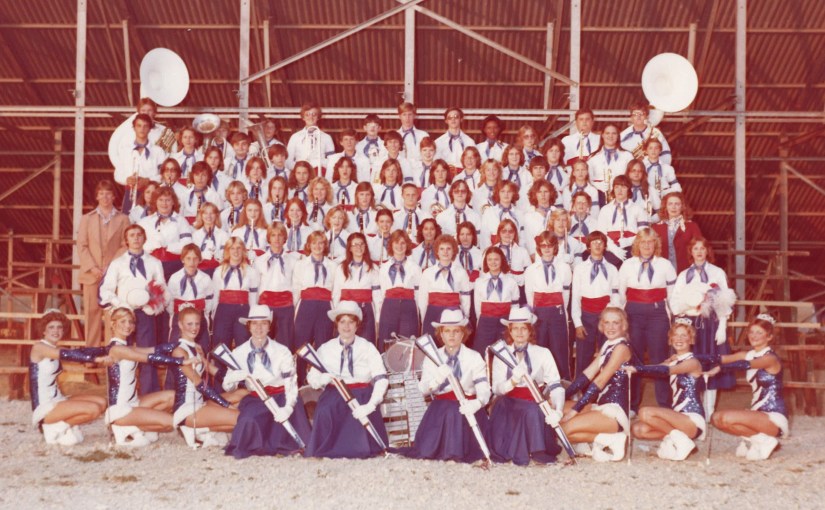
My last memory of Renda at Jordan is standing in the band room with him and Mr. Trotter, the principal, as Renda named Tony Cousins band field captain and Vickie Nail and me co-drum majors. Tony was a drummer and one of the nicest and most popular guys in the band. We still see each other… at least on Facebook, and a few years ago I had the pleasure of teaching his daughter at my college. As for Vickie, she was the youngest of the Nail sisters, who were three of the prettiest girls ever to grace the halls of Mortimer Jordan. We had matching uniforms, except hers had a long skirt. Our shirts were bright white and silky (probably Rayon, something I had to Google) with matching blue neck kerchiefs, red cummerbunds, and Cavalier hats with long ostrich feathers dyed blue and red. My shirt, a bit faded from time, hangs in the back of my closet; the hat rests on a bust atop the bookshelf in my bedroom; and the cummerbund and kerchief are long lost – 1978 was some time ago, after all. As with Tony, my contacts with Vickie now are pleasant but mostly over Facebook.   

I am also still in contact with Renda. We periodically message each other, and I love reading his Facebook posts about his Sicilian roots, something we share, his tributes to his mom and dad and his faith. He has retired from band directing… and come out of retirement more than once and continues to foster a love of music in his students. (He also passed the passion to his son, Stan, who is an outstanding director in his own right.) And Renda and I get to eat, reminisce, and play together at the Jacksonville State Southerners Alumni Reunion, and hopefully will do so again this coming November.

Back to 1978, after the school year ended my dad made a decision that is a testament to the type of man and father he was. It was time for him to change pastorates. He had two options: take a promotion that moved my family from the area and me away from Mortimer Jordan or accept a smaller church appoint that kept us in area and me in the same school district in order for me to be drum major.  All I have to say is that summer I met my new band director… at Mortimer Jordan! (Thank you, Papa Bear.) 

In the summer of 1978, Allen Bailey, also a JSU graduate, took the position of band director at Mortimer Jordan. Renda may have started the spark but Allen truly fanned the flame of my interest in music as a career. (Wow, that sounds cheesy, but it is true.) I do not remember all of the music from the fall of ’78, but I do recall we played Allen’s arrangement of Jenkins’ “American Overture for Band.” It was a great piece. But Allen did not just expose me to great music but to great performances. I rode him along with his then fiancé and now wife, Debbie, to Troy University to see the Marching Southerners. Of course, weather delayed us ; consequently, we only got there in time to see them march off the field after the halftime show.  He also took me and another band friend with him and Debbie to a drum and bugle competition at Jacksonville State. That trip his car died in Anniston on the way home, so waiting for a garage to open the next day, we four spent a restless night at The Heart of Anniston Hotel. We paid the nightly, not hourly rate (enough said). Then when I was in the Southerners, he and Debbie ferried me to Birmingham to march in the Veteran’s Day Parade. That time a policeman stopped us as Allen pulled onto the Interstate. Come to think of it, traveling with Allen was frequently interesting.

After Vickie graduated, leaving me the lone drum major, Allen arranged for lessons with Gordon McGraw, the drum major at Jacksonville State. Once a week for I’m not sure how long, I hopped in Allen’s car, and we headed to Jacksonville. Fortunately, we did not get caught in a deluge, break down, or get stopped by the police. Gordon and his roommate, Tam Easterwood, were hilarious, and I benefitted greatly from the lessons. First-place competition medals packed away somewhere testify to this. And I have a couple of trophies, as well, thanks to Allen. He arranged solos for trumpet and accompanied me on the piano when I competed in Teen Talent, a talent competition sponsored by my denomination, when I competed at regional, state, and nationals. He also played for me when I auditioned for a music scholarship at JSU, though I did not get a scholarship. But that is OK. At the audition, he introduced me to Dr. Walters and Dr. Davis, two men who would also have a significant influence on my life.

Oh, there is one more trip I should mention.  After the national Teen Talent competition in Dallas, Allen and I flew back to Alabama together. I stayed with him and Debbie for a few days. We raided my mom’s kitchen for any pot, pan, or ladle I wanted (something she still talks about); then he and Debbie moved me to Jacksonville in time for Southerner’s band camp, all because of 1978.

By the way, I call them Allen and Debbie instead of Mr. and Ms. Bailey because we became friends. I was honored to be Allen’s best man in their wedding. For years, he was the pianist at my dad’s church in Gardendale. For my parents, he was just another one their kids and was welcomed in their home like one. Symbolic of this relationship, Allen wore a tie my dad had given him to my dad’s viewing after he passed.  He pointed this out as he hugged my mother. Finally, a few years back in a Facebook post, I complimented a former student on her success, saying how proud I was of her. Allen responded to my post and said that my expression of pride in my student was exactly the way he felt about me. Yeah, that was a lump in my throat moment. I am embarrassed to say that I do not contact Allen as much as I should, something that I thought about just a few days ago. It is time I did something about that.

I realize what began as a brief muse has turned into a long ramble. I do not apologize, but I will close. My memories of 1978, its seminal events and other special people, such as Noah White, Sarah Glover, Devin Stephenson, and Jerald and Marla Wilson, to name a few, continued to fill my thoughts Sunday. It is interesting what can trigger a flood of memories – the smell of freshly cut grass, the sound of a marching band, the glimpse of an old photograph on the mantle, or even the cost of breakfast at McDonald’s. We cannot live in the past, but visiting it is not a bad idea, especially when it spurs us to reach out in the present to the people who made the past special.

Gotta go, I have some folks to get back in touch with.

For My Uncle Lloyd Burton

Today we said our goodbyes and laid to rest the mortal remains of my Uncle Lloyd Burton.

Lloyd was not one of a kind. He was one of two of a kind. He and his brother Floyd, older by a mere ten minutes, were born on August 15… a little bit ago. As is often the case with twins, they had a unique and close relationship. They even had a unique name for each other, “Yaya.” Both were Yaya. When they were just learning to speak, they could not pronounce their names and came up with Yaya. It stuck their whole lives. I have heard stories of their youth and how they were always together and frequently into something. This was a relationship that continued into their adulthood as they were business owners together for decades. And as Lloyd faced health challenges, my Uncle Floyd, along with my Aunt Sue, was there for his brother.

My mother is their older sister, which means she was born more than a little bit ago. Her name is Betty Ruth but that was morphed to Boof by her little brothers. My dad used to joke that since they only had one sister, only one of them was his brother-in-law. So he introduced them as “my brother-in-law Floyd and his brother Lloyd.” But there was love with the humor. Mom was reminiscing this week and said that just like any siblings, sometimes they disagreed, but regardless of the conversation, good or bad – agree or disagree, it always closed with “I love you.”

Lloyd was seldom out front or boisterous, preferring to work behind the scenes. I would like to quote Jeff Anderson, one of his friends:

“I know what kind of man Lloyd Burton was! They don’t make them like that anymore! He would give people food, hay for horses, gas and many other things no one ever knew except the ones who was watching…. He loved people like Jesus did!”

The day Lloyd passed, I visited with his wife of sixty-one years, my Aunt Martha. She said something very similar to Jeff’s words, how if at a fundraiser people were asked to raise their hands to give a certain amount, Lloyd never raised his hand. She noted he was reserved in public, much like his daddy had been. Yet though he would not raise his hand in the crowd, he still contributed quietly behind the scenes to meet the need.

On the other hand, just because he was reserved does not mean he was boring. He had a wry wit about him. I defer to Jeff Anderson one more time.

“We seen each other a couple of weeks ago at the gas pumps and started picking at each other! He said come on by for supper but make sure you bring something for us to eat!”

My earliest memories of my uncle are of him driving my grandfather‘s old red and white Ford tractor, plowing the gardens or bailing hay.

When I was in school, he helped me with a number of woodworking projects. He guided my hands as I used my grandfather‘s bandsaw to cut out a wooden map of Australia.  And he helped me build a wooden toolbox and workbench that I have to this day.

He gave me a talking to when he thought I needed it. (I needed it three times in my life if I remember correctly. What they were about is between us.)

He attended my wedding and the college graduation of my children.

And he invited me to dinner… as long as I brought him something to eat. The last time I saw him, about two weeks ago, I took him at his word and brought him a pineapple ice cream sundae, one of his favorite treats.  He could hardly wait to get it open and devour it. We closed our visit holding hands in prayer. His last words to me were ”Stephen, I love you.”

All of this is not to say my uncle was a perfect man; none of us are. But my uncle was a forgiven man, a man who had given his life to Christ. Because of that, we grieve at his passing, but we do not grieve like those who have no hope (1 Thessalonians 4:13).  Jordan, his granddaughter, called the day he passed his “celebration day.” I like that. Here’s how C.S. Lewis would describe Lloyd’s celebration day:

“He saw Him…. could look on Him. What is blinding, suffocating fire to [others] is now cool light to [Lloyd], is clarity itself, and wears the form of a man.”

Yaya, we love you. We are going to miss you. But we also know one day we will be reunited with you and all those who have put their faith in our Savior.

Stephen with Lloyd and Martha
September 2024

A Christmas Greeting Calligram and a Christmas Letter

Instead of a photo and a poem this Christmas, I got creative (maybe) and opted for a calligram, a visual image and poem in one. A calligram, sometimes called a concrete poem or visual poem, is poetry in which the arrangement of words creates a visual image, in this case a Christmas tree. The poem is comprised of Christmas greetings in numerous languages. Almost all the greetings are in languages that are spoken by my friends across the globe. But just for fun, I added an Anglo-Saxon greeting in runes, though I doubt Alfred the Great is going to read my poem. And I included Latin, you know, just in case the Pope does read it.

Additionally, I decided to share an old-fashioned Christmas letter. Back in the day, Christmas letters shared the news of the year and holiday greetings. I loved getting them, especially from my cousin Diane in Houston. Of course, Christmas letters have become a thing of the past since we share each other’s lives in real time on social media. At least, I know you guys see my antics online because you tell me about it. Anyway, here we go.

My family and I have had a blessed year, and I am grateful to God for his blessings. Olivia and Nicholas both graduated from Athens State University. Olivia and Emma, her traveling pal, headed to Korea for two weeks right after graduation to spend time with two special friends, Fred and Reneea, who serve at school in Pohang. When she returned, she accepted a position with the Marion County School System as a science teacher at Brilliant High School, where she is also the band sponsor. The job keeps her busy, but she seems to be doing well.

Nick, on the other hand, only drove to Jasper after graduation where he served as the Interim Director of the Walker County Arts Alliance for several month. Additionally, he is a social media manager for Blanton Media Group, the publisher of 78 Magazine and The Walker Leader. He is learning a lot about real-world application of the skills he attained at Athens. And just to round things out, he is working on an M.A. in Visual Communications. In fact, he just got his first grades – all A’s.

The extended family is doing well also. Mom is still sharp and sassy as ever, and all things considered, doing rather well. We are all excited about the latest addition to the Rizzo clan. My nephew Chase and his wife Britney had a baby boy, Martin Joseph Rizzo, in November. He is absolutely adorable! As you can imagine, we are all beside ourselves excited about Martin’s arrival.

Finally, our congregation is blessed as well. I cannot share everything, but I will mention two additions to the church this year. Blaine Johnson joined our ministry team this year as the music pastor. He is talented, motivated, and caring. The growth in both quantity and quality of our music ministry under his direction was apparent in our Christmas service. (Find it on Facebook or Youtube at Sumiton Church of God.) And Jonah Barrett has taken on a volunteer position of Young ACollege/Young Adult Pastor. I have known him since the day he was born and am so proud of the young man he has become. His late father, Reverend DeWayne Barrett, a dear friend of mine, would be proud of his son as well.  For these and all God’s blessings, I am truly grateful.

To close, over the last few Christmases I have participated in a tradition where friends and I share recipes with each other. Last year, I shared a photocopy of my grandmother’s handwritten fruitcake cookie recipe. This year, I would like to share a Greek feta cheese dip called bouyourdi.

Ingredients:
Greek feta (Get the good kind in brine water, not the crumbled, dry feta.)
Tomatoes (It is so much better with fresh heirloom tomatoes, but even canned diced tomatoes will work.)
Peppers (Traditionally a sweet bell pepper is used, but I have used all kinds depending on what I have on hand, such as pepperoncini, roasted red peppers, etc.)
Ground oregano
Olive oil
Additional toppings can include olives and thinly sliced onions.

Directions:
Place the feta in a small baking dish. Layer the tomatoes and peppers on top. Add any additional toppings you wish. Sprinkle with oregano. I love oregano, so I use a lot. If you’re new to using oregano, start out with just barely more than enough to be seen. Drizzle with olive oil. Don’t be stingy with the oil.

Bake at 350 degrees for about forty-five minutes. At about fifteen minutes in, give it a stir to mix the ingredients. (If you’re impatient like I am, you can microwave it, but it tastes better baked slowly.)  Feta cheese does not become stringy like most cheeses. Instead, it has a nice creamy consistency when melted.

Pair with pita bread or chips or a nice, toasted bread of your choice. It is great as an appetizer or a snack.

When I make bouyourdi, I am reminded of a visit to my dad’s family in Galveston something over twenty years ago. We met up with dad’s cousin Mary, better known as “Wee,” and decided to go to his cousin Sonny Martini’s place for lunch, unaware that Sonny had moved his restaurant. When we arrived, we found a new restaurant and its owner, a nice Greek gentleman, instead of Sonny. But that was OK. We spent the next hour or so chatting with each other and with him, talking about Greece and family (Dad’s grandmother was Greek) and enjoying slice after slice after slice of warm feta and olives.

That was one of those times that was just perfect for making a memory. And though Dad and Wee have both passed, I go back in my mind to that day and live it over with them. My hope is that you might make similar memories and enjoy a warm plate of bouyourdi with your family and friends.

Merry Christmas!

A Life of Influence

The impetus for this little flash of inspiration (at least I hope it is inspired) was a recent conversation with a friend and ministry colleague, but as Emerson wrote to Whitman, it also “had a long foreground” in my life’s experiences and in the distillation of ideas by many others. In mulling over what is to follow, I initially thought to title this piece leadership something or other. Truth be told, however, leadership positions are rare and not easily attained. But influence is something that we can develop regardless of our station or role. My proposition, then, is not how to lead but how to live a life of influence, which comes down to one, two, three… six.  

ONE LIFE

There is only one of you. You have desires and dreams, and you have abilities and influence, maybe even amazing dreams and significant influence. Still, what you can do alone is limited. On the other hand, through healthy, meaningful, intentional relationships, what you can accomplish in conjunction with others is exponential. 

Up front, I need to state an axiom. Two relationships, your relationship with God and your relationship with your family, must supersede the following. If they do, these relationships will invigorate and nourish what follows. If they do not, failure in one or both of these primary relationships will diminish and taint success in any other area of life. 

We all have areas of interest and influence, whether you are the gardener or the president. (You might be surprised at which one has the greater sphere of influence. If you do not believe this, study the life  of George Washington Carver.) Of course, there are exceptions to every rule. But I surmise the majority of us at most can successfully operate in only a very limited number of areas. 

TWO SPHERES OF INFLUENCE

Consequently, I recommend that you select two spheres of influence, just two. These are areas where you have a passion, standing, and opportunity. These could be large and expansive or small and focused. Regardless, they must be realistic for where you are in your life. 

There is a good chance you will discover that your two areas of interest are related but not synonymous per se. They might or might not be scalable over time. Likely one will be more important to you than the other. Do not be rigid, yet the more clearly you can enunciate your spheres the more you free yourself of the noise and clutter in your life. 

This does not mean you do not have other areas of your life or concerns where you are tangentially or temporarily engaged. But these two areas will frame and focus who you are, where you primarily engage, and how much of your resources, the most precious of which is time, you allocate. 

THREE GOALS

Develop up to three goals, no more, for each area. A goal must be concrete and measurable. While you might personally benefit from accomplishments in these areas, ultimately the more altruistic your motivation and goal, the greater your sense of accomplishment and fulfillment will be. (There is nothing wrong with having a feeling or sense of accomplishment and probably something wrong if you do not.) 

Your goals are not set in stone. Some goals might be finite and, therefore, could be accomplished at some point. Your priorities could shift for any number of reasons, such as you gain more insight in an area or life in general. Spheres of influence could change, or your own life situation changes.  Still, some goals might be perpetual and lifelong. 

SIX PEOPLE

Finally, for each area select six people whom you are prepared to invest your life in to accomplish your goals. These can be mentors, mentees, or partners. (Sometimes the lines between these roles will blur.) You could discover there is overlap in the six in your spheres of influence, and you might never have six all at one time. Certainly, I do not mean find people to use to get what you want. Rather, these are relationships that you will cultivate and invest in over time. These are relationships that are mutually beneficial and nourishing. Outside of your relationships with God and your family, these people you select and relationships you develop will form and frame you over the course of your life more than you might imagine, so choose wisely. 

Why six? Several reasons, but I will mention one. If you select six individuals in two spheres of influence, you have selected twelve people you value enough to invite into your life. If twelve was enough for Jesus, then it should be more than enough for you.

Mentors, partners, and mentees will come and go in your life for a myriad of reasons. Pastor Roger Daniel contacted me when he needed a six-month interim music pastor. Since then, a meaningful twenty-year friendship has followed.  On the other hand, not too long ago I lost a dear friend through death. Only my father’s passing has left a bigger hole in my life than the loss of Randy Beck. Others come and go because of a change in vocation or location. Sometimes your priorities diverge. And sadly, some may leave you through betrayal or apostasy. When this happens, do not be surprised. After all, Jesus had Judas. 

When you are young, if you are smart you will find mentors, people who are wiser, stronger, more developed, and better connected in your areas of interest. As you mature and develop, you should continue to have mentors, but you will also begin to make partners, men and women with like passions and complementary gifts and abilities. Of course, at some point you should find yourself in the role of mentor as well if you grow better, not just older. But what you should never do is find yourself alone. Stay engaged with people – your people. 

To recap, put God, not ministry, first and family second in your life will align your overall priorities. 

Limit yourself to two areas of significant interest or influence will guide you in allocating your resources. 

Have clear and measurable goals will focus and direct your actions. 

Engage a set of people with whom you intentionally engage will drive your calendar and multiply your effort. 

Of course, none of this is a guarantee of success, but it will ensure a greater likelihood of success with reduced stress and decreased anxiety, byproducts of prioritizing and focusing the one life you have. 

Musing About Learning… and Hammers

I was recently taking an online professional development workshop. As part of the course, we were asked to share our thoughts about student learning. Since the end of summer is nearing, teachers are putting away their sunscreen and dusting off their lesson plans. So I thought I would share my little musing about learning.

Students learn by doing: students learn by failing.

Or to put it another way, a heuristic approach to learning provides opportunities for students to fail constructively.

I frequently create learning opportunities for students around the boos boos they tend to make in whatever subject I am teaching. They are shocked. I am not. (Having taught more than a minute, I have a list of recurring boos boos that students make.) Then I help them find the solution.

I was first introduced to this approach by my Granddaddy Burton. He was not and educator, but he intuitively knew a thing or two about how to drive a lesson home.

I recall when I was about ten years old. He and I were in what he called the shop room. It contained numerous power tools, such as a table saw and a bandsaw and a wood lathe and such. Lots of things were built or repaired there over the years. On this occasion, he was working on some project at his workbench. I was nearby on the floor struggling to remove a bent nail from a board.

I hooked the claws of the hammer on the nail and pulled with all my might, handle end of the hammer facing me. And then it happened! The hammer slipped loose from the nail, and then end of the handle came flying toward me, hitting me square on the top of my head.

My grandfather looked at me and calmly said, “I knew that was going to happen.”

I loved my granddaddy. In fact, I adored him. But in that moment, all I could think was “then why did you let me do it?”

He then took my hammer and a small block of wood. Using the block of wood as a fulcrum, he effortlessly removed the nail.

I was amazed and appalled. Couldn’t he have just shown me without having me banging my brain with a hammer? Maybe. But that certainly was what we educators refer to as a teachable moment. And it must have worked. Here I am more than half a century later, and I still recall this lesson. And I also still pull nails with a little block of wood as a fulcrum. His approach, clearly a heuristic if painful approach, worked.

Sans the hammer and headache, I try to create similar opportunities for students to learn from their own mistakes. If you have taken one of my classes, you can attest to this.

So, my fellow educators, for what it is worth here is my contribution to your back-to-school preparation. Now create some learning moments of your own by letting your students fail. (Just don’t use hammers.)

Sometimes Your Second Favorite Pastor’s Name is Harv

In the summer of 2021, my second favorite pastor resigned the pastorate of my home church to take another in Florida. I had known Victor Massey since we were young. Our fathers were ministers together, long before Victor became my second favorite pastor. I said he was my second favorite since my dad, Bucky Rizzo, was a pastor and will always be my favorite. But until August of 2021, Victor Massey was my second favorite. 

Then my church had a rather lengthy pastoral search while Pastor Lane Sargent, one of our retired former pastors, served as our interim and my second favorite pastor for about ten months. During that time the deacons prayed to find God’s will for who our pastor should be. Different individuals in the congregation indicated they believed it was God’s will for this one or that one to be our pastor. Yet I do not believe God cares. I do not mean God is unconcerned, but having given us free will he provides us opportunities to make wise choices and will give us wisdom in the process according to James 1:5. I really do not see that there is scriptural support to indicate that God has one particular person selected for every pastoral position or most any other role in the church or government or community or anywhere else. The task is not to ascertain the elusive and secret will of God. Instead, scripture teaches that we are much more responsible for our decisions and the consequences of our choices than we might like, which is why we should pray for wisdom. 

With that theological understanding, I prayed for wisdom and when the pastoral vote was taken, I voted for someone whom I felt met the scriptural guidelines of a pastor and would be a good match for our congregation. But that is not who was selected. Instead in March 2022, Harv Turner became my second favorite pastor. Along with Pastor Harv, his wonderful wife Kelley became a part of our church family. Shortly after, his father, a retired minister himself, and his mother joined the congregation. And we are working to entice his son, daughter-in-law, and daughter to move to Sumiton. 

I like Pastor Harv, my second favorite pastor. He is personable and a tad high energy. Early on, I noticed that he calls the names of members of the congregation as he preaches. It is a rhetorical device to engage the congregation, a way to connect new faces with names, and sometimes just something fun to do. Mine was one of the names he called, and I began to rib him about it on social media, keeping a tally of how many times he mentioned me. He was good natured and played along. 

Recently Pastor Harv ran into me at lunch on campus. (He tried to sneak away, but I caught him.) We shared a meal and a conversation, which ran the gamut. Partly we talked about his experiences as a pastor, his father’s, my father’s, and even mine as a past music pastor. My dad more than once said that pastoring should be one of the most enjoyable jobs in the world, but people – Christians – make it difficult. The Apostle Paul surely knew this, which is why in 1 Thessalonians 5:13 he admonishes “to esteem them [pastors and church leaders] very highly in love for the work’s sake. And be at peace among yourselves.” In the conversation with Pastor Harv, I alluded to this scripture. I try to follow it, though I know at times I have failed. But this is the way my favorite pastor raised me. 

I certainly hope I demonstrate my love and respect for Pastor Harv, whether he calls my name in his sermons or not. But I think he will keep calling my name. If you are a believer and live in the area but do not have a pastor, come meet mine. His name is Harv. I think you would like him if you met him. 

On the other hand, if you are not a believer you need a savior. His name is Jesus. I know he has been calling your name much longer and with deeper love than Pastor Harv has been calling mine. And you would love him if you met him.

I Drink Coffee Now…

My dad’s family is Greek and Italian, two cultures with coffee traditions dating back for centuries. 

Greek coffee is strong. It is made in a special pot called a briki. A briki is a small copper pot. Fine ground coffee is placed in it. As the coffee boils, a foam forms at the top of the briki while the grounds settle to the bottom. Greek coffee is meant to be enjoyed slowly and savored. 

Americans tend to be more familiar with Italian coffee, particularly espresso. (My daughter will be quick to correct you. “It’s espresso, not expresso!”) Espresso is also made with fine ground coffee, which is then combined with very hot water under pressure. This is what causes that characteristic hiss from an espresso machine. 

But a cultural connection to coffee is not why I drink it, although it is amazing what you can find when you Google something.   

My mother and grandmother drank coffee all my life. Well, actually my grandmother took a little coffee with her milk is a more accurate description. 

But a family tradition is not why I drink coffee.

I drink my coffee decaffeinated and black with a spoon of local honey. (According to my doctor, the local honey can help with my allergies.) Since my coffee is decaffeinated, I do not drink it for an energy boost. Supposedly there are health benefits to coffee, but that’s not why I drink it. (I could just take the honey straight without the coffee.) And it certainly is not the taste! I cannot stand the taste of coffee. 

So why do I drink coffee?

Because I am old enough.

I used to joke that I was not old enough to drink coffee. But this year I had one of those birthdays, you know, that kind that ends with a zero. So I figure maybe now I am old enough. 

Zero birthdays mark milestones. 

The first zero birthday marks the beginning of double digit birthdays. It is a big, round number that sets you apart from the other kids. With the second zero birthday you leave your teens and begin to move toward adulthood, at least hopefully, though in our Western culture of affluence, at twenty just as at ten most are not thinking about anything or anyone beyond the moment and themselves. They are just enjoying life. They are free with limited responsibilities, and I suppose there is nothing wrong with this. 

Of course, by the time the third zero birthday rolls around, you really should not be living in your parents’ basement. You are thirty; you are grown now. Get a job! Somewhere after that second one and definitely by the third, most people are still focusing on themselves but in terms of career and family. The next several zero birthdays seem to come faster and faster and with more responsibility and change. 

For example, on my last zero birthday I had just become a single parent with the custody of two young children. (This is when I probably should have started drinking caffeinated coffee because I needed the energy.) Life was busy and very uncertain. In fact, the only certainty was the knowledge that my job was to focus on raising my two children and everything else centered around that. It made differences in my career choices, my friendships and associations with others, virtually every aspect of my life was touched and re-focused on them, and it has been that way for the last decade. I am not complaining. I have said repeatedly that dad is my favorite job. But it is work. There was homework and band practice and recitals and more homework and teacher conferences and homecoming dances and more even homework and first dates and everything that goes with raising children. My involvement in my church and community was focused on helping my children engage and making those areas better for my children. Hopefully, anything I advocated for helped others as well. But the reason I showed up to the band boosters and parent teacher organization meetings was because of Nick and Olivia. Yet now, they are almost grown and on their own, having both now celebrated two zero birthdays. 

So as I greeted my most recent zero birthday, it was with the realization that my kiddos were nearly grown and the compelling task of most of my existence was almost complete. Of course, I will always be their dad. You never outgrow your father, even after he is gone. But you do grow into a different relationship with your parents. I recognized my kids were almost there. And in the process, I began to wonder who I was and what was next. Yeah, I know this is a first-world problem, but it is still a problem. 

I struggled through it a bit, and then I started drinking coffee because I was finally old enough. In fact, I was several zero birthdays old enough. 

About this time, one of my Greek friends shared a picture of figs from a tree that his dad had brought from Greece. His dad had long since passed, but his children, grandchildren, and great-grand children were still reaping the fruits of his labor. I responded to him with a Greek proverb: “A society grows great when old men plant trees in whose shade they will never sit.” By the way, I am not old, but it helped me begin to frame my thinking about this zero birthday and beyond.

Similar to the wisdom of this proverb, there is a passage in Genesis that is often lost on those who are not from the Middle East: “Abraham planted a tamarisk tree in Beersheba, and there called on the name of the LORD, the Everlasting God” (Genesis 21:33). The tamarisk tree is sometimes called a salt cedar. It is well-adapted for inhospitable climates and can grow into a large tree that provides shade from the heat of the sun. But Abraham was not going to sit under the shade of the tree. Even the long life of a Biblical Patriarch would not be long enough for the tree to grow to full maturity to provide shade for Abraham. Instead, Abraham planted the tree trusting God’s promise that the land it was planted in would belong to his children and grandchildren and great-grandchildren and generations to come. I wonder what Abraham pondered about the fulfillment of God’s promises as he watered and tended the tree as a young sprout. 

So now I drink coffee, my version of a tamarisk tree. It reminds me that between now and the next zero birthday to keep doing what I have been doing. From the outside, it probably will not look all that different. I will still work to improve my community. I will remain involved with the local school system, to the delight or dismay of the school administrators. I will continue to communicate with my elected officials. I will participate in my church, hoping to make it better, not just for me or even my kids but for generations yet to come. 

Realizing my life and my work is not just about me helps me take this zero birthday in stride. I do not mean to aggrandize. After all, I am just drinking coffee, planting trees, and trusting in the promises of God.