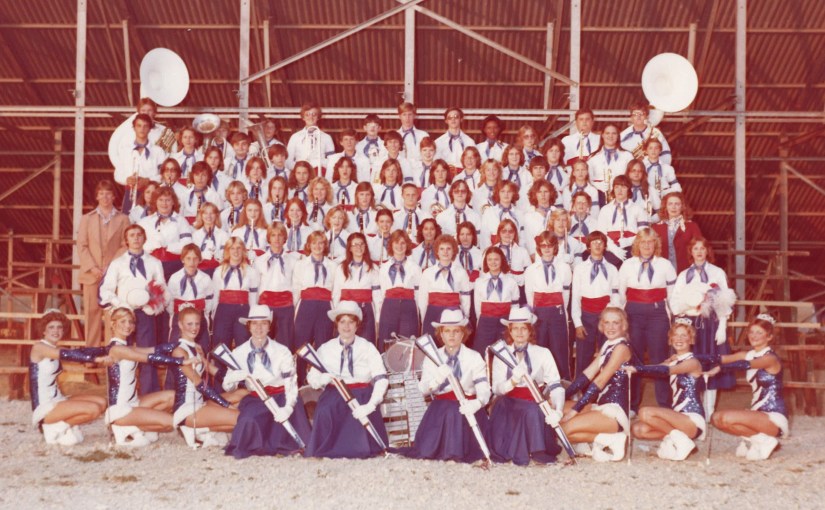
For My Uncle Lloyd Burton

Today we said our goodbyes and laid to rest the mortal remains of my Uncle Lloyd Burton.

Lloyd was not one of a kind. He was one of two of a kind. He and his brother Floyd, older by a mere ten minutes, were born on August 15… a little bit ago. As is often the case with twins, they had a unique and close relationship. They even had a unique name for each other, “Yaya.” Both were Yaya. When they were just learning to speak, they could not pronounce their names and came up with Yaya. It stuck their whole lives. I have heard stories of their youth and how they were always together and frequently into something. This was a relationship that continued into their adulthood as they were business owners together for decades. And as Lloyd faced health challenges, my Uncle Floyd, along with my Aunt Sue, was there for his brother.

My mother is their older sister, which means she was born more than a little bit ago. Her name is Betty Ruth but that was morphed to Boof by her little brothers. My dad used to joke that since they only had one sister, only one of them was his brother-in-law. So he introduced them as “my brother-in-law Floyd and his brother Lloyd.” But there was love with the humor. Mom was reminiscing this week and said that just like any siblings, sometimes they disagreed, but regardless of the conversation, good or bad – agree or disagree, it always closed with “I love you.”

Lloyd was seldom out front or boisterous, preferring to work behind the scenes. I would like to quote Jeff Anderson, one of his friends:

“I know what kind of man Lloyd Burton was! They don’t make them like that anymore! He would give people food, hay for horses, gas and many other things no one ever knew except the ones who was watching…. He loved people like Jesus did!”

The day Lloyd passed, I visited with his wife of sixty-one years, my Aunt Martha. She said something very similar to Jeff’s words, how if at a fundraiser people were asked to raise their hands to give a certain amount, Lloyd never raised his hand. She noted he was reserved in public, much like his daddy had been. Yet though he would not raise his hand in the crowd, he still contributed quietly behind the scenes to meet the need.

On the other hand, just because he was reserved does not mean he was boring. He had a wry wit about him. I defer to Jeff Anderson one more time.

“We seen each other a couple of weeks ago at the gas pumps and started picking at each other! He said come on by for supper but make sure you bring something for us to eat!”

My earliest memories of my uncle are of him driving my grandfather‘s old red and white Ford tractor, plowing the gardens or bailing hay.

When I was in school, he helped me with a number of woodworking projects. He guided my hands as I used my grandfather‘s bandsaw to cut out a wooden map of Australia.  And he helped me build a wooden toolbox and workbench that I have to this day.

He gave me a talking to when he thought I needed it. (I needed it three times in my life if I remember correctly. What they were about is between us.)

He attended my wedding and the college graduation of my children.

And he invited me to dinner… as long as I brought him something to eat. The last time I saw him, about two weeks ago, I took him at his word and brought him a pineapple ice cream sundae, one of his favorite treats.  He could hardly wait to get it open and devour it. We closed our visit holding hands in prayer. His last words to me were ”Stephen, I love you.”

All of this is not to say my uncle was a perfect man; none of us are. But my uncle was a forgiven man, a man who had given his life to Christ. Because of that, we grieve at his passing, but we do not grieve like those who have no hope (1 Thessalonians 4:13).  Jordan, his granddaughter, called the day he passed his “celebration day.” I like that. Here’s how C.S. Lewis would describe Lloyd’s celebration day:

“He saw Him…. could look on Him. What is blinding, suffocating fire to [others] is now cool light to [Lloyd], is clarity itself, and wears the form of a man.”

Yaya, we love you. We are going to miss you. But we also know one day we will be reunited with you and all those who have put their faith in our Savior.

Stephen with Lloyd and Martha
September 2024

“My” Home Church

“My” and “mine” are first-person possessive pronouns. Every English speaker on the planet knows these words. In fact, they are probably some of the first words we use: “Mine!” – even if the thing being claimed is not ours.

For the first blog in the 64 & MoreTM  series, I wanted to begin with “my”county, Walker County. But what specifically in my county was a conundrum. I considered several options:

* Little Vine Cemetery where well over a hundred years of my family is buried
* Sumiton’s Frog Festival that has nothing do to with frogs
* The Foothills Festival in Jasper that actually does have something to do with foothills since Walker County is situated in the foothills of the Appalachian Mountains
* The Alabama Mining Museum that chronicles history of the coal industry in the county
* The Coal Miners monument in Carbon Hill
* The old Sumiton Mines, where my grandfather worked as a teen and whose tunnels run under my office building at Bevill State, which has two campuses in Walker County, the former Walker Technical School in Sumiton and Walker College in Jasper
* The Mulberry Fork of the Black Warrior River that flows through the county
* Lewis Smith Lake, the man-made lake that in its formation submerged numerous homes, farms, and communities in Walker County, as well as Cullman and Winston Counties
* The Bankhead House in Jasper or the Long Mansion in Cordova

I could go on, which is kind of the point of this series since there is so much to see and experience in every county in Alabama. Finally, I settled on my home church, the Sumiton Church of God, which brings me back to the possessive pronoun “my.”

“My” can mean I possess something and can control it, like I do my car or my computer, and pretty much do with as I please.

“My” can mean I possess something and am responsible for it, like fulfilling the responsibilities of my job.

“My” can mean I possess something and can benefit from it, like my paycheck and my other benefits from my job.

The first of these uses of “my” is problematic theologically in reference to a church. Christ is the head of The Church. It is His mystical body on Earth, and it is His – or should be – His to control. But the other two uses aptly apply to my church. The Sumiton Church of God is my church, and as a member I am responsible for it – for supporting its mission and ministries with my finances, talents, and time. It is the other “my,” however, the “my” that has to do with the benefits that I think of most when I think of my church. The church has been and done much more for me than I have for the church, and I am blessed to call the Sumiton Church of God my home church.

Let me begin with a bit about its history.

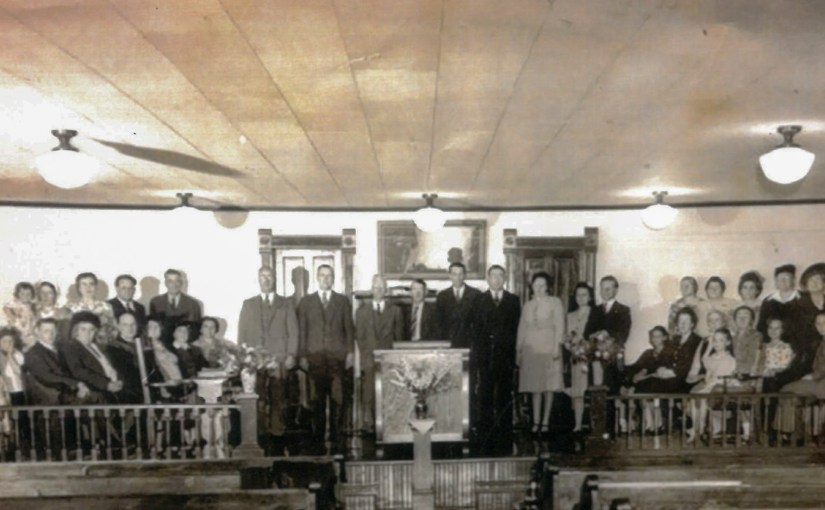
The Sumiton Church of God was part of [the Pentecostal movement that began] in 1896 in a revival in Camp Creek, North Carolina, at the Shearer Schoolhouse, [where] believers experienced an outpouring of the Holy Spirit…. In the 1920s, Sumiton was a typical mining town with a few houses, a dirt road, and one very memorable landmark, a huge pile of slate, the rock waste from the coal… [when] in 1922, an evangelist named Kennedy preached a Pentecostal revival in a tent in Sumiton. [The church was officially established in November of1923.] The first church meeting location was a brush arbor. Eventually, a small frame building was constructed to house the fledgling congregation. (Sumiton Church of God: We’ve Come This Far by Faith, documentary by Nicholas Rizzo, 2023, https://nickphotographics.myportfolio.com/sumiton-church-of-god-weve-come-this-far-by-faith).

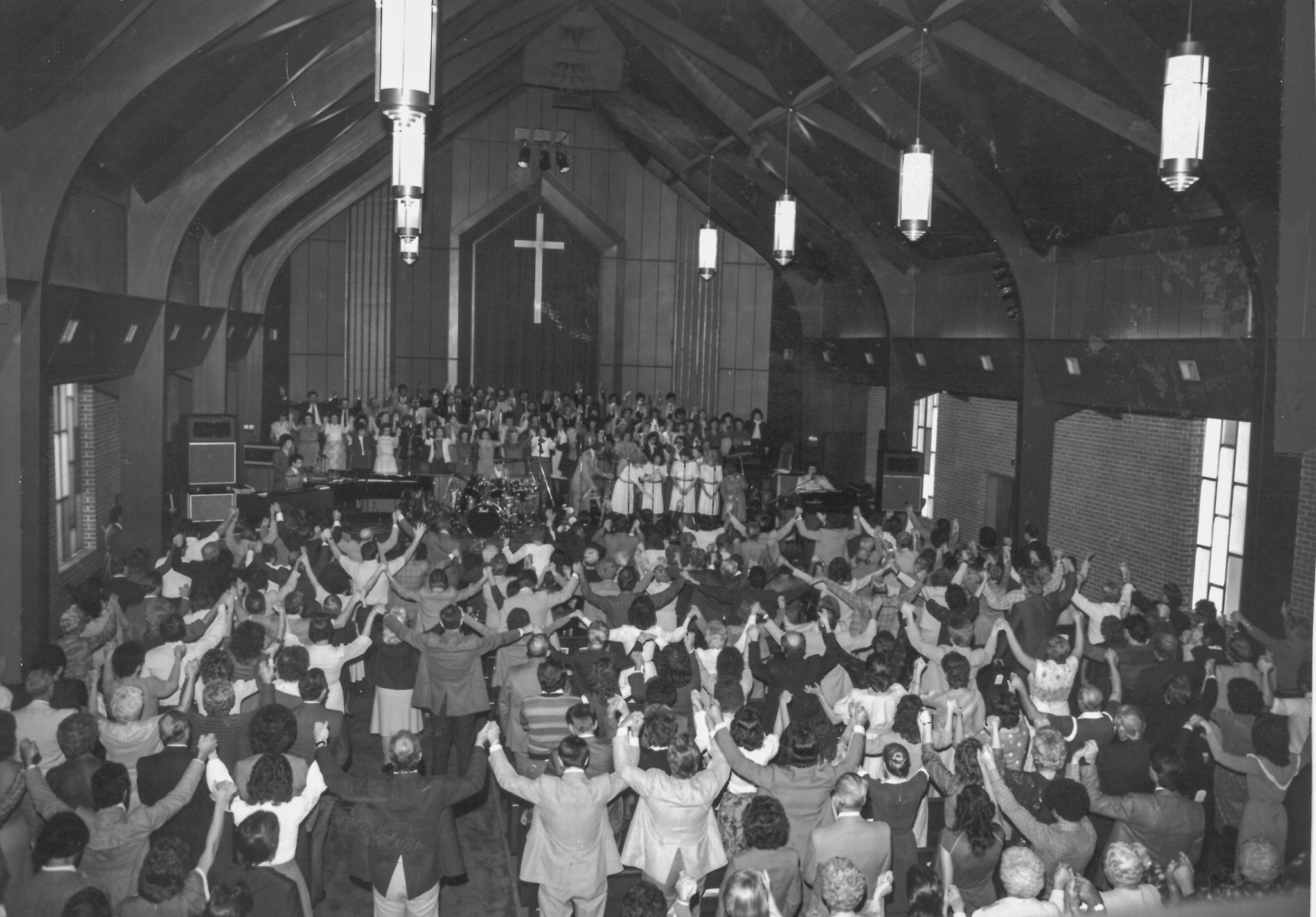
Since its humble beginnings in 1923, the church has built and occupied many buildings, including its recently renovated state-of-the art sanctuary. Sometimes people call these facilities the church, and I understand why, and even though carpeted floors and padded seats are an improvement over sawdust and wooden benches, the church is not its facilities. The church is the people who gather in the building.

Likewise, leading up to our church’s Centennial Celebration in 2023, there were a few voices that expressed concern that the excitement of the congregation about the impending centennial was worshipping the past. Just like those who look at nice facilities and see the church, these, too, missed the point. The excitement about the past was not so much about the events and accomplishments. Sure, we were grateful for the accomplishments and milestones. But what we cherished most from our past was the people who had worshipped together and who had served, worked, and sacrificed together.

The church was… and is… the people!  In fact, the Greek word ἐκκλησία (ecclesia or ekklesia) that is translated as church in English refers to people, “the called-out ones.” 

Bishop Toby Morgan, a Sumiton native and former pastor of the church, voiced this well in his sermon at the church’s Centennial Celebration in November 2023. Taking his text from Hebrews 12, which speaks of “a great cloud of witnesses,” Bishop Morgan spoke of those who had influenced his life as “cloud dwellers.”

My cloud dwellers… Built things, they painted things, they fixed things, they cut grass, they trimmed bushes, they cleaned floors, they scrubbed the toilets. My cloud dwellers reached out to others… They brought children to church, and they taught in nursing homes, they carried food to hungry people… My cloud dwellers prayed. They would pray all the time!

Though Bishop Morgan is a few years older than I am, we shared many of the same cloud dwellers that he had in mind, such as my own grandparents, Buel and Myrtle Burton, who worked in children’s ministry for decades. Others from my childhood memories include Brother Clyde Ellis, Sister Lillie Cook, Sister Bea Brasfield, and Sister Jerry Dodd, who are, as my Uncle Floyd says, heroes.

And while I cherish these memories, I cherish the present as well. Every Sunday morning as I play in the church band, on my right is a thirteen-year-old saxophone player, Grant, who just comes to my shoulder. And on my left is a seventeen-year-old trombone player, Dawson, whose shoulder I barely reach. Thrown in the mix are three other horn players, some of whom I have played with for more decades than I will share.

Six generations of my family have been part of the Sumiton Church, and it thrills me to see the sixth generation worshiping with their parents and grandparents and great-grandparents. Alongside them are other unassuming members of the church who faithfully serve on Sunday mornings greeting visitors and operating the sound and video systems and teaching classes. Through the week, they run a food bank and operate recovery ministry and prison ministries. Some of them host small group Bible studies in their homes, and others do it while riding motorcycles on Highway 78 or hiking the Sipsey Wilderness. They care for children and youth and senior adults and… like Bishop Morgan’s cloud dwellers, they pray!

I hope you visit Walker County. If you come from Birmingham west on Highway 78, about two miles inside Walker County look up to the right. You will see the Sumiton Church of God building perched on a hill.  But if you want to see “my” church, you will have to wait till Sunday morning when we gather. Or through the week, stop by an area city hall or a local restaurant or store or one of the school campuses or a thousand other places in Walker County. That is where you will find the my church, the Sumiton Church of God.

I do hope you visit.  

64 & More

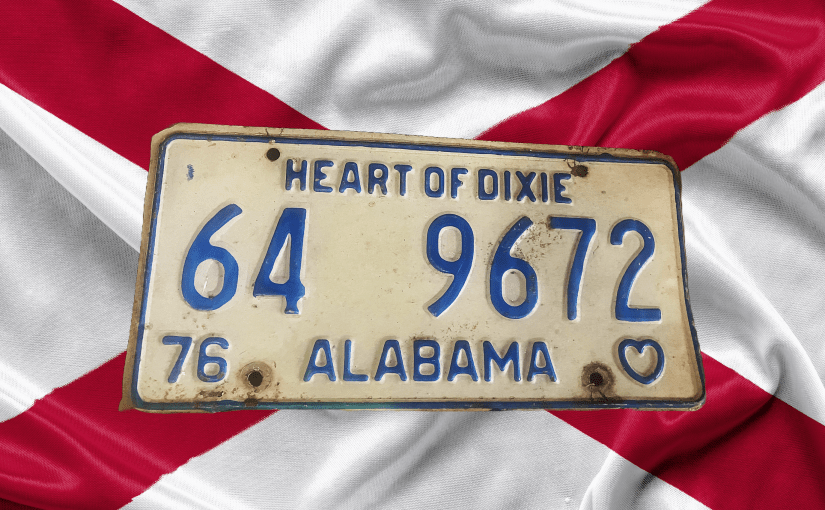
64 & More is a series of blogs about places and events in Alabama. There are sixty-seven counties in Alabama. The number sixty-four for decades was the numeric designation for Walker County used on Alabama car tags, hence the number sixty-four in the title. The more  extends not only to the other sixty-six counties but also the major cities and pretty much anything else I want it to. After all, it is my blog.

I hope you enjoy exploring 64 & More as much as I have enjoyed exploring my state and writing about it.

A Christmas Greeting Calligram and a Christmas Letter

Instead of a photo and a poem this Christmas, I got creative (maybe) and opted for a calligram, a visual image and poem in one. A calligram, sometimes called a concrete poem or visual poem, is poetry in which the arrangement of words creates a visual image, in this case a Christmas tree. The poem is comprised of Christmas greetings in numerous languages. Almost all the greetings are in languages that are spoken by my friends across the globe. But just for fun, I added an Anglo-Saxon greeting in runes, though I doubt Alfred the Great is going to read my poem. And I included Latin, you know, just in case the Pope does read it.

Additionally, I decided to share an old-fashioned Christmas letter. Back in the day, Christmas letters shared the news of the year and holiday greetings. I loved getting them, especially from my cousin Diane in Houston. Of course, Christmas letters have become a thing of the past since we share each other’s lives in real time on social media. At least, I know you guys see my antics online because you tell me about it. Anyway, here we go.

My family and I have had a blessed year, and I am grateful to God for his blessings. Olivia and Nicholas both graduated from Athens State University. Olivia and Emma, her traveling pal, headed to Korea for two weeks right after graduation to spend time with two special friends, Fred and Reneea, who serve at school in Pohang. When she returned, she accepted a position with the Marion County School System as a science teacher at Brilliant High School, where she is also the band sponsor. The job keeps her busy, but she seems to be doing well.

Nick, on the other hand, only drove to Jasper after graduation where he served as the Interim Director of the Walker County Arts Alliance for several month. Additionally, he is a social media manager for Blanton Media Group, the publisher of 78 Magazine and The Walker Leader. He is learning a lot about real-world application of the skills he attained at Athens. And just to round things out, he is working on an M.A. in Visual Communications. In fact, he just got his first grades – all A’s.

The extended family is doing well also. Mom is still sharp and sassy as ever, and all things considered, doing rather well. We are all excited about the latest addition to the Rizzo clan. My nephew Chase and his wife Britney had a baby boy, Martin Joseph Rizzo, in November. He is absolutely adorable! As you can imagine, we are all beside ourselves excited about Martin’s arrival.

Finally, our congregation is blessed as well. I cannot share everything, but I will mention two additions to the church this year. Blaine Johnson joined our ministry team this year as the music pastor. He is talented, motivated, and caring. The growth in both quantity and quality of our music ministry under his direction was apparent in our Christmas service. (Find it on Facebook or Youtube at Sumiton Church of God.) And Jonah Barrett has taken on a volunteer position of Young ACollege/Young Adult Pastor. I have known him since the day he was born and am so proud of the young man he has become. His late father, Reverend DeWayne Barrett, a dear friend of mine, would be proud of his son as well.  For these and all God’s blessings, I am truly grateful.

To close, over the last few Christmases I have participated in a tradition where friends and I share recipes with each other. Last year, I shared a photocopy of my grandmother’s handwritten fruitcake cookie recipe. This year, I would like to share a Greek feta cheese dip called bouyourdi.

Ingredients:
Greek feta (Get the good kind in brine water, not the crumbled, dry feta.)
Tomatoes (It is so much better with fresh heirloom tomatoes, but even canned diced tomatoes will work.)
Peppers (Traditionally a sweet bell pepper is used, but I have used all kinds depending on what I have on hand, such as pepperoncini, roasted red peppers, etc.)
Ground oregano
Olive oil
Additional toppings can include olives and thinly sliced onions.

Directions:
Place the feta in a small baking dish. Layer the tomatoes and peppers on top. Add any additional toppings you wish. Sprinkle with oregano. I love oregano, so I use a lot. If you’re new to using oregano, start out with just barely more than enough to be seen. Drizzle with olive oil. Don’t be stingy with the oil.

Bake at 350 degrees for about forty-five minutes. At about fifteen minutes in, give it a stir to mix the ingredients. (If you’re impatient like I am, you can microwave it, but it tastes better baked slowly.)  Feta cheese does not become stringy like most cheeses. Instead, it has a nice creamy consistency when melted.

Pair with pita bread or chips or a nice, toasted bread of your choice. It is great as an appetizer or a snack.

When I make bouyourdi, I am reminded of a visit to my dad’s family in Galveston something over twenty years ago. We met up with dad’s cousin Mary, better known as “Wee,” and decided to go to his cousin Sonny Martini’s place for lunch, unaware that Sonny had moved his restaurant. When we arrived, we found a new restaurant and its owner, a nice Greek gentleman, instead of Sonny. But that was OK. We spent the next hour or so chatting with each other and with him, talking about Greece and family (Dad’s grandmother was Greek) and enjoying slice after slice after slice of warm feta and olives.

That was one of those times that was just perfect for making a memory. And though Dad and Wee have both passed, I go back in my mind to that day and live it over with them. My hope is that you might make similar memories and enjoy a warm plate of bouyourdi with your family and friends.

Merry Christmas!

A Life of Influence

The impetus for this little flash of inspiration (at least I hope it is inspired) was a recent conversation with a friend and ministry colleague, but as Emerson wrote to Whitman, it also “had a long foreground” in my life’s experiences and in the distillation of ideas by many others. In mulling over what is to follow, I initially thought to title this piece leadership something or other. Truth be told, however, leadership positions are rare and not easily attained. But influence is something that we can develop regardless of our station or role. My proposition, then, is not how to lead but how to live a life of influence, which comes down to one, two, three… six.  

ONE LIFE

There is only one of you. You have desires and dreams, and you have abilities and influence, maybe even amazing dreams and significant influence. Still, what you can do alone is limited. On the other hand, through healthy, meaningful, intentional relationships, what you can accomplish in conjunction with others is exponential. 

Up front, I need to state an axiom. Two relationships, your relationship with God and your relationship with your family, must supersede the following. If they do, these relationships will invigorate and nourish what follows. If they do not, failure in one or both of these primary relationships will diminish and taint success in any other area of life. 

We all have areas of interest and influence, whether you are the gardener or the president. (You might be surprised at which one has the greater sphere of influence. If you do not believe this, study the life  of George Washington Carver.) Of course, there are exceptions to every rule. But I surmise the majority of us at most can successfully operate in only a very limited number of areas. 

TWO SPHERES OF INFLUENCE

Consequently, I recommend that you select two spheres of influence, just two. These are areas where you have a passion, standing, and opportunity. These could be large and expansive or small and focused. Regardless, they must be realistic for where you are in your life. 

There is a good chance you will discover that your two areas of interest are related but not synonymous per se. They might or might not be scalable over time. Likely one will be more important to you than the other. Do not be rigid, yet the more clearly you can enunciate your spheres the more you free yourself of the noise and clutter in your life. 

This does not mean you do not have other areas of your life or concerns where you are tangentially or temporarily engaged. But these two areas will frame and focus who you are, where you primarily engage, and how much of your resources, the most precious of which is time, you allocate. 

THREE GOALS

Develop up to three goals, no more, for each area. A goal must be concrete and measurable. While you might personally benefit from accomplishments in these areas, ultimately the more altruistic your motivation and goal, the greater your sense of accomplishment and fulfillment will be. (There is nothing wrong with having a feeling or sense of accomplishment and probably something wrong if you do not.) 

Your goals are not set in stone. Some goals might be finite and, therefore, could be accomplished at some point. Your priorities could shift for any number of reasons, such as you gain more insight in an area or life in general. Spheres of influence could change, or your own life situation changes.  Still, some goals might be perpetual and lifelong. 

SIX PEOPLE

Finally, for each area select six people whom you are prepared to invest your life in to accomplish your goals. These can be mentors, mentees, or partners. (Sometimes the lines between these roles will blur.) You could discover there is overlap in the six in your spheres of influence, and you might never have six all at one time. Certainly, I do not mean find people to use to get what you want. Rather, these are relationships that you will cultivate and invest in over time. These are relationships that are mutually beneficial and nourishing. Outside of your relationships with God and your family, these people you select and relationships you develop will form and frame you over the course of your life more than you might imagine, so choose wisely. 

Why six? Several reasons, but I will mention one. If you select six individuals in two spheres of influence, you have selected twelve people you value enough to invite into your life. If twelve was enough for Jesus, then it should be more than enough for you.

Mentors, partners, and mentees will come and go in your life for a myriad of reasons. Pastor Roger Daniel contacted me when he needed a six-month interim music pastor. Since then, a meaningful twenty-year friendship has followed.  On the other hand, not too long ago I lost a dear friend through death. Only my father’s passing has left a bigger hole in my life than the loss of Randy Beck. Others come and go because of a change in vocation or location. Sometimes your priorities diverge. And sadly, some may leave you through betrayal or apostasy. When this happens, do not be surprised. After all, Jesus had Judas. 

When you are young, if you are smart you will find mentors, people who are wiser, stronger, more developed, and better connected in your areas of interest. As you mature and develop, you should continue to have mentors, but you will also begin to make partners, men and women with like passions and complementary gifts and abilities. Of course, at some point you should find yourself in the role of mentor as well if you grow better, not just older. But what you should never do is find yourself alone. Stay engaged with people – your people. 

To recap, put God, not ministry, first and family second in your life will align your overall priorities. 

Limit yourself to two areas of significant interest or influence will guide you in allocating your resources. 

Have clear and measurable goals will focus and direct your actions. 

Engage a set of people with whom you intentionally engage will drive your calendar and multiply your effort. 

Of course, none of this is a guarantee of success, but it will ensure a greater likelihood of success with reduced stress and decreased anxiety, byproducts of prioritizing and focusing the one life you have. 

Musing About Learning… and Hammers

I was recently taking an online professional development workshop. As part of the course, we were asked to share our thoughts about student learning. Since the end of summer is nearing, teachers are putting away their sunscreen and dusting off their lesson plans. So I thought I would share my little musing about learning.

Students learn by doing: students learn by failing.

Or to put it another way, a heuristic approach to learning provides opportunities for students to fail constructively.

I frequently create learning opportunities for students around the boos boos they tend to make in whatever subject I am teaching. They are shocked. I am not. (Having taught more than a minute, I have a list of recurring boos boos that students make.) Then I help them find the solution.

I was first introduced to this approach by my Granddaddy Burton. He was not and educator, but he intuitively knew a thing or two about how to drive a lesson home.

I recall when I was about ten years old. He and I were in what he called the shop room. It contained numerous power tools, such as a table saw and a bandsaw and a wood lathe and such. Lots of things were built or repaired there over the years. On this occasion, he was working on some project at his workbench. I was nearby on the floor struggling to remove a bent nail from a board.

I hooked the claws of the hammer on the nail and pulled with all my might, handle end of the hammer facing me. And then it happened! The hammer slipped loose from the nail, and then end of the handle came flying toward me, hitting me square on the top of my head.

My grandfather looked at me and calmly said, “I knew that was going to happen.”

I loved my granddaddy. In fact, I adored him. But in that moment, all I could think was “then why did you let me do it?”

He then took my hammer and a small block of wood. Using the block of wood as a fulcrum, he effortlessly removed the nail.

I was amazed and appalled. Couldn’t he have just shown me without having me banging my brain with a hammer? Maybe. But that certainly was what we educators refer to as a teachable moment. And it must have worked. Here I am more than half a century later, and I still recall this lesson. And I also still pull nails with a little block of wood as a fulcrum. His approach, clearly a heuristic if painful approach, worked.

Sans the hammer and headache, I try to create similar opportunities for students to learn from their own mistakes. If you have taken one of my classes, you can attest to this.

So, my fellow educators, for what it is worth here is my contribution to your back-to-school preparation. Now create some learning moments of your own by letting your students fail. (Just don’t use hammers.)

Light

In the beginning –

      Light spread across the cosmos at His Word. 

         Lightnings flashed from Mount Sinai at His presence. 

In Bethlehem –

      A child born – Eternal Light wrapped in flesh and swaddled –

         His mother’s eyes twinkled at His smile.

      A Son given – Eternal Light embraced by mortality and death –  

         Hell stared in terror before His consuming flame.

In the land of shadows –

      The people who stumbled in darkness rejoiced

         As the great Light shone. 

The nutcracker (photographed 2022) on this year’s card is part of Cullman’s Christkindlmarkt. This is one of the twin nutcrackers, approximately fifteen feet tall, that flank the gateway to the Christkindlmarkt.

The card design is by my son, Nicholas S. M. Rizzo. The season’s greeting is in German. The font is based on Bauhaus (Germany, 1919-1933) principles. His overall design is straightforward with an emphasis on negative space.

Sometimes Your Second Favorite Pastor’s Name is Harv

In the summer of 2021, my second favorite pastor resigned the pastorate of my home church to take another in Florida. I had known Victor Massey since we were young. Our fathers were ministers together, long before Victor became my second favorite pastor. I said he was my second favorite since my dad, Bucky Rizzo, was a pastor and will always be my favorite. But until August of 2021, Victor Massey was my second favorite. 

Then my church had a rather lengthy pastoral search while Pastor Lane Sargent, one of our retired former pastors, served as our interim and my second favorite pastor for about ten months. During that time the deacons prayed to find God’s will for who our pastor should be. Different individuals in the congregation indicated they believed it was God’s will for this one or that one to be our pastor. Yet I do not believe God cares. I do not mean God is unconcerned, but having given us free will he provides us opportunities to make wise choices and will give us wisdom in the process according to James 1:5. I really do not see that there is scriptural support to indicate that God has one particular person selected for every pastoral position or most any other role in the church or government or community or anywhere else. The task is not to ascertain the elusive and secret will of God. Instead, scripture teaches that we are much more responsible for our decisions and the consequences of our choices than we might like, which is why we should pray for wisdom. 

With that theological understanding, I prayed for wisdom and when the pastoral vote was taken, I voted for someone whom I felt met the scriptural guidelines of a pastor and would be a good match for our congregation. But that is not who was selected. Instead in March 2022, Harv Turner became my second favorite pastor. Along with Pastor Harv, his wonderful wife Kelley became a part of our church family. Shortly after, his father, a retired minister himself, and his mother joined the congregation. And we are working to entice his son, daughter-in-law, and daughter to move to Sumiton. 

I like Pastor Harv, my second favorite pastor. He is personable and a tad high energy. Early on, I noticed that he calls the names of members of the congregation as he preaches. It is a rhetorical device to engage the congregation, a way to connect new faces with names, and sometimes just something fun to do. Mine was one of the names he called, and I began to rib him about it on social media, keeping a tally of how many times he mentioned me. He was good natured and played along. 

Recently Pastor Harv ran into me at lunch on campus. (He tried to sneak away, but I caught him.) We shared a meal and a conversation, which ran the gamut. Partly we talked about his experiences as a pastor, his father’s, my father’s, and even mine as a past music pastor. My dad more than once said that pastoring should be one of the most enjoyable jobs in the world, but people – Christians – make it difficult. The Apostle Paul surely knew this, which is why in 1 Thessalonians 5:13 he admonishes “to esteem them [pastors and church leaders] very highly in love for the work’s sake. And be at peace among yourselves.” In the conversation with Pastor Harv, I alluded to this scripture. I try to follow it, though I know at times I have failed. But this is the way my favorite pastor raised me. 

I certainly hope I demonstrate my love and respect for Pastor Harv, whether he calls my name in his sermons or not. But I think he will keep calling my name. If you are a believer and live in the area but do not have a pastor, come meet mine. His name is Harv. I think you would like him if you met him. 

On the other hand, if you are not a believer you need a savior. His name is Jesus. I know he has been calling your name much longer and with deeper love than Pastor Harv has been calling mine. And you would love him if you met him.

I Drink Coffee Now…

My dad’s family is Greek and Italian, two cultures with coffee traditions dating back for centuries. 

Greek coffee is strong. It is made in a special pot called a briki. A briki is a small copper pot. Fine ground coffee is placed in it. As the coffee boils, a foam forms at the top of the briki while the grounds settle to the bottom. Greek coffee is meant to be enjoyed slowly and savored. 

Americans tend to be more familiar with Italian coffee, particularly espresso. (My daughter will be quick to correct you. “It’s espresso, not expresso!”) Espresso is also made with fine ground coffee, which is then combined with very hot water under pressure. This is what causes that characteristic hiss from an espresso machine. 

But a cultural connection to coffee is not why I drink it, although it is amazing what you can find when you Google something.   

My mother and grandmother drank coffee all my life. Well, actually my grandmother took a little coffee with her milk is a more accurate description. 

But a family tradition is not why I drink coffee.

I drink my coffee decaffeinated and black with a spoon of local honey. (According to my doctor, the local honey can help with my allergies.) Since my coffee is decaffeinated, I do not drink it for an energy boost. Supposedly there are health benefits to coffee, but that’s not why I drink it. (I could just take the honey straight without the coffee.) And it certainly is not the taste! I cannot stand the taste of coffee. 

So why do I drink coffee?

Because I am old enough.

I used to joke that I was not old enough to drink coffee. But this year I had one of those birthdays, you know, that kind that ends with a zero. So I figure maybe now I am old enough. 

Zero birthdays mark milestones. 

The first zero birthday marks the beginning of double digit birthdays. It is a big, round number that sets you apart from the other kids. With the second zero birthday you leave your teens and begin to move toward adulthood, at least hopefully, though in our Western culture of affluence, at twenty just as at ten most are not thinking about anything or anyone beyond the moment and themselves. They are just enjoying life. They are free with limited responsibilities, and I suppose there is nothing wrong with this. 

Of course, by the time the third zero birthday rolls around, you really should not be living in your parents’ basement. You are thirty; you are grown now. Get a job! Somewhere after that second one and definitely by the third, most people are still focusing on themselves but in terms of career and family. The next several zero birthdays seem to come faster and faster and with more responsibility and change. 

For example, on my last zero birthday I had just become a single parent with the custody of two young children. (This is when I probably should have started drinking caffeinated coffee because I needed the energy.) Life was busy and very uncertain. In fact, the only certainty was the knowledge that my job was to focus on raising my two children and everything else centered around that. It made differences in my career choices, my friendships and associations with others, virtually every aspect of my life was touched and re-focused on them, and it has been that way for the last decade. I am not complaining. I have said repeatedly that dad is my favorite job. But it is work. There was homework and band practice and recitals and more homework and teacher conferences and homecoming dances and more even homework and first dates and everything that goes with raising children. My involvement in my church and community was focused on helping my children engage and making those areas better for my children. Hopefully, anything I advocated for helped others as well. But the reason I showed up to the band boosters and parent teacher organization meetings was because of Nick and Olivia. Yet now, they are almost grown and on their own, having both now celebrated two zero birthdays. 

So as I greeted my most recent zero birthday, it was with the realization that my kiddos were nearly grown and the compelling task of most of my existence was almost complete. Of course, I will always be their dad. You never outgrow your father, even after he is gone. But you do grow into a different relationship with your parents. I recognized my kids were almost there. And in the process, I began to wonder who I was and what was next. Yeah, I know this is a first-world problem, but it is still a problem. 

I struggled through it a bit, and then I started drinking coffee because I was finally old enough. In fact, I was several zero birthdays old enough. 

About this time, one of my Greek friends shared a picture of figs from a tree that his dad had brought from Greece. His dad had long since passed, but his children, grandchildren, and great-grand children were still reaping the fruits of his labor. I responded to him with a Greek proverb: “A society grows great when old men plant trees in whose shade they will never sit.” By the way, I am not old, but it helped me begin to frame my thinking about this zero birthday and beyond.

Similar to the wisdom of this proverb, there is a passage in Genesis that is often lost on those who are not from the Middle East: “Abraham planted a tamarisk tree in Beersheba, and there called on the name of the LORD, the Everlasting God” (Genesis 21:33). The tamarisk tree is sometimes called a salt cedar. It is well-adapted for inhospitable climates and can grow into a large tree that provides shade from the heat of the sun. But Abraham was not going to sit under the shade of the tree. Even the long life of a Biblical Patriarch would not be long enough for the tree to grow to full maturity to provide shade for Abraham. Instead, Abraham planted the tree trusting God’s promise that the land it was planted in would belong to his children and grandchildren and great-grandchildren and generations to come. I wonder what Abraham pondered about the fulfillment of God’s promises as he watered and tended the tree as a young sprout. 

So now I drink coffee, my version of a tamarisk tree. It reminds me that between now and the next zero birthday to keep doing what I have been doing. From the outside, it probably will not look all that different. I will still work to improve my community. I will remain involved with the local school system, to the delight or dismay of the school administrators. I will continue to communicate with my elected officials. I will participate in my church, hoping to make it better, not just for me or even my kids but for generations yet to come. 

Realizing my life and my work is not just about me helps me take this zero birthday in stride. I do not mean to aggrandize. After all, I am just drinking coffee, planting trees, and trusting in the promises of God.

Merry Christmas 2022

Christmas Memories

I have a vivid memory of riding down Highway 78 with my grandfather in his 64 Impala listening to Christmas carols to the illumination of the emerald green dashboard light.

I remember racing Evil Knievel action figures down the stairs with my cousins at my aunt’s and my uncle giving us all silver dollars in Christmas cards.

I remember as a child gathering on Christmas with my great-grandmother’s family and as a dad spending Christmas at the Chattanooga Choo Choo with my kids.

I well recall shinning silver tinsel trees, electric candles in the windows, Santa pictures at Pizitz, paper chain link garlands, nativity displays, mistletoe, wassail, fruitcake cookies, baklava, and after the Church Christmas pageant brown paper bags filled with oranges, apples, and nuts.

This year from my family to yours, may you make Christmas memories to cherish for years to come!

The accompanying photo titled Weihnachtspyramide, 2022, was taken in Cullman, Alabama, of the largest Christmas pyramid in the United States.