
“My” and “mine” are first-person possessive pronouns. Every English speaker on the planet knows these words. In fact, they are probably some of the first words we use: “Mine!” – even if the thing being claimed is not ours.
For the first blog in the 64 & MoreTM series, I wanted to begin with “my”county, Walker County. But what specifically in my county was a conundrum. I considered several options:
* Little Vine Cemetery where well over a hundred years of my family is buried
* Sumiton’s Frog Festival that has nothing do to with frogs
* The Foothills Festival in Jasper that actually does have something to do with foothills since Walker County is situated in the foothills of the Appalachian Mountains
* The Alabama Mining Museum that chronicles history of the coal industry in the county
* The Coal Miners monument in Carbon Hill
* The old Sumiton Mines, where my grandfather worked as a teen and whose tunnels run under my office building at Bevill State, which has two campuses in Walker County, the former Walker Technical School in Sumiton and Walker College in Jasper
* The Mulberry Fork of the Black Warrior River that flows through the county
* Lewis Smith Lake, the man-made lake that in its formation submerged numerous homes, farms, and communities in Walker County, as well as Cullman and Winston Counties
* The Bankhead House in Jasper or the Long Mansion in Cordova
I could go on, which is kind of the point of this series since there is so much to see and experience in every county in Alabama. Finally, I settled on my home church, the Sumiton Church of God, which brings me back to the possessive pronoun “my.”
“My” can mean I possess something and can control it, like I do my car or my computer, and pretty much do with as I please.
“My” can mean I possess something and am responsible for it, like fulfilling the responsibilities of my job.
“My” can mean I possess something and can benefit from it, like my paycheck and my other benefits from my job.
The first of these uses of “my” is problematic theologically in reference to a church. Christ is the head of The Church. It is His mystical body on Earth, and it is His – or should be – His to control. But the other two uses aptly apply to my church. The Sumiton Church of God is my church, and as a member I am responsible for it – for supporting its mission and ministries with my finances, talents, and time. It is the other “my,” however, the “my” that has to do with the benefits that I think of most when I think of my church. The church has been and done much more for me than I have for the church, and I am blessed to call the Sumiton Church of God my home church.
Let me begin with a bit about its history.
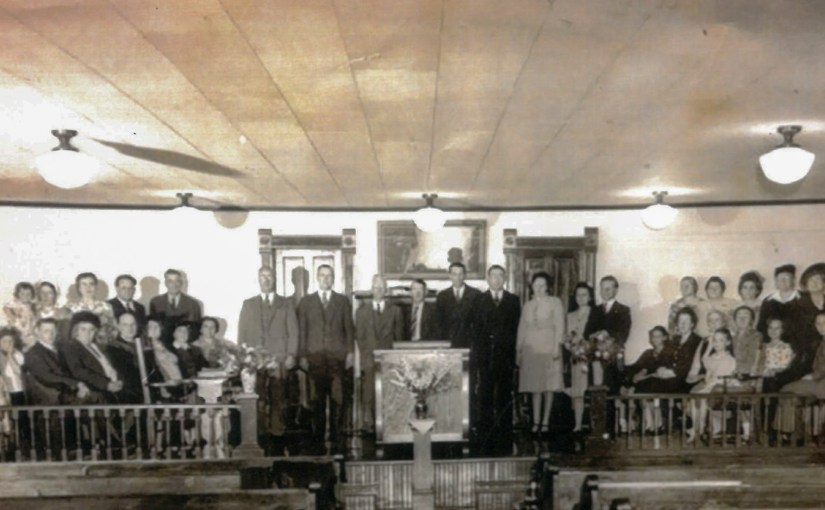
The Sumiton Church of God was part of [the Pentecostal movement that began] in 1896 in a revival in Camp Creek, North Carolina, at the Shearer Schoolhouse, [where] believers experienced an outpouring of the Holy Spirit…. In the 1920s, Sumiton was a typical mining town with a few houses, a dirt road, and one very memorable landmark, a huge pile of slate, the rock waste from the coal… [when] in 1922, an evangelist named Kennedy preached a Pentecostal revival in a tent in Sumiton. [The church was officially established in November of1923.] The first church meeting location was a brush arbor. Eventually, a small frame building was constructed to house the fledgling congregation. (Sumiton Church of God: We’ve Come This Far by Faith, documentary by Nicholas Rizzo, 2023, https://nickphotographics.myportfolio.com/sumiton-church-of-god-weve-come-this-far-by-faith).
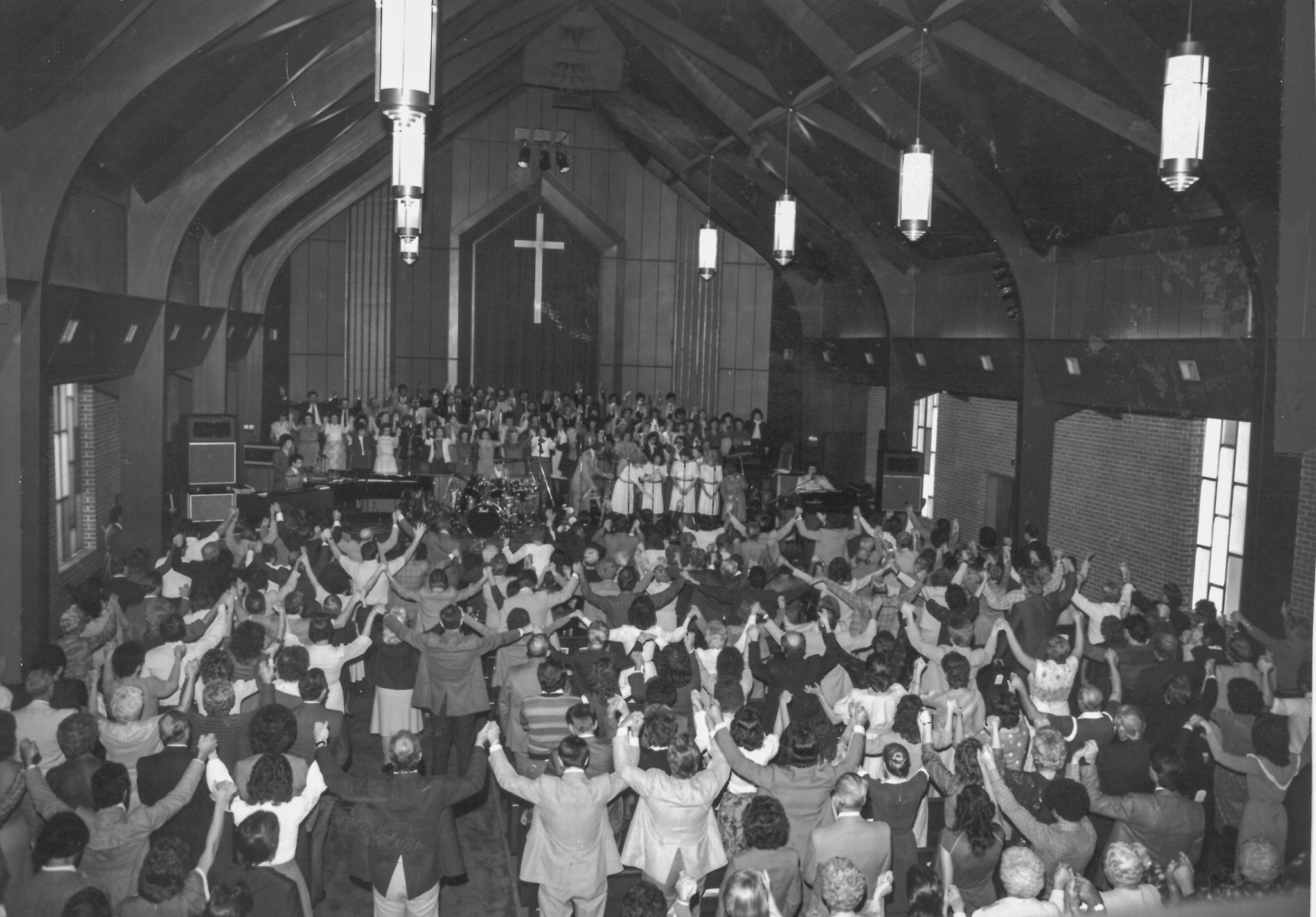
Since its humble beginnings in 1923, the church has built and occupied many buildings, including its recently renovated state-of-the art sanctuary. Sometimes people call these facilities the church, and I understand why, and even though carpeted floors and padded seats are an improvement over sawdust and wooden benches, the church is not its facilities. The church is the people who gather in the building.
Likewise, leading up to our church’s Centennial Celebration in 2023, there were a few voices that expressed concern that the excitement of the congregation about the impending centennial was worshipping the past. Just like those who look at nice facilities and see the church, these, too, missed the point. The excitement about the past was not so much about the events and accomplishments. Sure, we were grateful for the accomplishments and milestones. But what we cherished most from our past was the people who had worshipped together and who had served, worked, and sacrificed together.
The church was… and is… the people! In fact, the Greek word ἐκκλησία (ecclesia or ekklesia) that is translated as church in English refers to people, “the called-out ones.”
Bishop Toby Morgan, a Sumiton native and former pastor of the church, voiced this well in his sermon at the church’s Centennial Celebration in November 2023. Taking his text from Hebrews 12, which speaks of “a great cloud of witnesses,” Bishop Morgan spoke of those who had influenced his life as “cloud dwellers.”
My cloud dwellers… Built things, they painted things, they fixed things, they cut grass, they trimmed bushes, they cleaned floors, they scrubbed the toilets. My cloud dwellers reached out to others… They brought children to church, and they taught in nursing homes, they carried food to hungry people… My cloud dwellers prayed. They would pray all the time!
Though Bishop Morgan is a few years older than I am, we shared many of the same cloud dwellers that he had in mind, such as my own grandparents, Buel and Myrtle Burton, who worked in children’s ministry for decades. Others from my childhood memories include Brother Clyde Ellis, Sister Lillie Cook, Sister Bea Brasfield, and Sister Jerry Dodd, who are, as my Uncle Floyd says, heroes.
And while I cherish these memories, I cherish the present as well. Every Sunday morning as I play in the church band, on my right is a thirteen-year-old saxophone player, Grant, who just comes to my shoulder. And on my left is a seventeen-year-old trombone player, Dawson, whose shoulder I barely reach. Thrown in the mix are three other horn players, some of whom I have played with for more decades than I will share.
Six generations of my family have been part of the Sumiton Church, and it thrills me to see the sixth generation worshiping with their parents and grandparents and great-grandparents. Alongside them are other unassuming members of the church who faithfully serve on Sunday mornings greeting visitors and operating the sound and video systems and teaching classes. Through the week, they run a food bank and operate recovery ministry and prison ministries. Some of them host small group Bible studies in their homes, and others do it while riding motorcycles on Highway 78 or hiking the Sipsey Wilderness. They care for children and youth and senior adults and… like Bishop Morgan’s cloud dwellers, they pray!
I hope you visit Walker County. If you come from Birmingham west on Highway 78, about two miles inside Walker County look up to the right. You will see the Sumiton Church of God building perched on a hill. But if you want to see “my” church, you will have to wait till Sunday morning when we gather. Or through the week, stop by an area city hall or a local restaurant or store or one of the school campuses or a thousand other places in Walker County. That is where you will find the my church, the Sumiton Church of God.
I do hope you visit.




 Rizzo's Rambles and Ruminations