

When the weather is cold and I am shut up inside, the most natural thing to do is sleep. The second most natural thing to do is make something yummy. My go-to cold weather taste is usually chilly. However, on our first winter weather day home from school this semester, I opted for homemade chicken vegetable soup.
And once I start making it and I realized that I also needed to be working in my online classes, the most natural thing to do was…. write about the soup instead of working in my online classes. It might not have been the most prudent, but it was the most fun. Of course, I promise I did not let my students languish.
When the kids were younger, this would have been a project that we worked on together. I determined early on that both my son and daughter should learn how to do laundry and cook before I turned them loose on an unsuspecting world. And they both have mastered those tasks. But the learning process was fun, especially the cooking part. As they developed maturity and dexterity, I relinquished parts of the process to them, such as cutting up carrots, peeling potatoes, and such.
Now that they are both grown and almost out the door, they both had real work to do on this day also. So dad was on his own, except for the occasional request to have my son reach the top shelf or my daughter give me suggestions. He is good at top shelf reaching, and she is good at instructing.
Once we got the word that there would be a cold and frozen day, I made a grocery list and let Nick and Olivia divide and conquer to assemble the list of ingredients from the store before the frozen precipitation hit the ground.
INGREDIENTS:
Pepper, salt, dried parsley, and dried sage. (You will use these to taste, or as my daughter says, “until the voices of your ancestors tell you that that is enough.”)
Two 48-ounce containers of chicken broth. I prefer reduced salt. (I generally cook like I am feeding an army, but you can reduce the recipe as needed.)
Three good-size chicken breast. (I really prefer the flavor of dark meat. But deboned chicken breasts are easier to work with than having to debone thighs for soup.)
One stalk of celery
Two 16-ounce bags of carrots (I normally like to get the really large diameter carrots from the local veggie stand, but since we made the grocery list on a Sunday, that was not an option. Also, if you do not want to peel the carrots, baby carrots would be fine.)
One large onion (This time I opted for a large yellow onion.)
About three cloves of garlic or equivalent pre-minced (I keep whole garlic on hand but also a container of pre-minced in the fridge for quick use.)
Two cups of spinach (This was my daughter’s addition. She has recently fallen in love with spinach and had a 2-cup bag in the fridge.)
Approximately two cups of dried elbow macaroni (Why? Because my grandmother did it.)
You can add to this or take from as you wish. But this combination turned out to be really tasty. I liked that the flavor profile that did not use tomato products of any type. I love tomato! But it is a dominant flavor, so giving the family a different taste from tomato-based foods like chili or spaghetti sauce made for a delicious change.
Of course, one of the wonderful things about making a recipe like this is adding or taking away what you prefer or simply making it with what you have on hand.
COOKING INSTRUCTIONS:
You can go at this all at one time and probably get everything prepped, with the exception of waiting on the chicken breasts to cook, in about thirty minutes or less. However, this day was one of those go-at-your-leisure days. So I interspersed the food prep with the other activities of the day.
Begin with the chicken breasts. I like to use a steamer, but you may boil them as well. I seasoned them by coating one side with dried sage and parsley and pepper. I eye-balled this. Sage goes well with chicken, but I suggest less sage than the other two because it can be a bit overpowering. I use a pepper grinder because the whole peppercorns hold their flavor longer than pre-ground.) And I personally like a lot of pepper!
If you do not have a steamer, boil the chicken but do not overcook it. Remember you are going to move it to the soup mixture where it will continue to cook.
Steaming (or boiling) produced a nice broth, a cup or so, that I added to the soup mixture.
Once you get the chicken started, beginner vegetable prep. This will not take long.
I did a rough cut for most of the veggies. You can decide the size texture that you prefer.
I peeled the carrots and cut them into about quarter inch rounds. These were small diameter carrots. I usually like the larger ones that are about 1 inch around. They just seem to be sweeter.
I cut the onion into about quarter inch pieces as well. Sometimes I like to leave the onion and longer strips. Again, this is soup. Everything is going to get softer as you cook it. So the larger these pieces are the more integrity to the bite you will have if you begin with larger pieces.
With this in mind, I cut the celery into half inch pieces. And I throw in the leafy tops of the celery as well, the more the merrier. Be sure to rinse your celery good because it can trap sand and soil.
Rough mince the garlic.
After the veggies are prepped, pour your chicken broth in a 6 quart or larger pan and bring to a boil while you add the first few ingredients.
As I said, you can scale the recipe down if you wish. Yet if you have never cooked like you are cooking for an army, try it! For one thing, large quantities are more forgiving than small. If, for example, you get it too much salty, add water. Or if it looks like you have too many carrots, drop in more celery, even if it is just to get an aesthetically pleasing look. And really, prepping big does not take that much more time than preparing smaller portions.
It is also nice to have soup to share or for the next day. We ate this batch for lunch and supper and all three took it for lunch the next day and still had enough to share with my mother and sister.
Salt to taste as you go, but I like to get everything in the mix before I begin to add salt.
As the broth comes a boil, add the veggies first that take longer to cook. Add the elbow macaroni in early as well. (I actually boiled my pasta in a separate little pan and then poured it into the soup mixture, but that really was not necessary in hindsight.)
Cover to cook, but if you want the soup to reduce, then leave uncovered. Generally, however, you do not really want your soup to boil away.
I started with carrots and then onions. Let them boil a while, but you do not want them mushy.
After that, reduce your temperature to a simmer, keeping the pot covered. Add the pasta. After a time, add the celery because it does not take it that long to soften up. Finally add the spinach or any leafy green of your choice at the end. It wilts quickly. Different greens will bring their own flavor. The spinach was a nice addition. (Credit goes to my daughter.)
Somewhere along the way my chicken was finished steaming. I let it cool just enough to touch. I do not have the cooking hands my Grandmama Burton did. It seemed like she could just about stick her hands into a boiling pot of water. But I am a little more delicate.
I cut the chicken into small cubes, which of course eventually fell apart in the soup. I am not really sure exactly when in the cooking process I added the chicken. So just add it whenever yours are ready. And I as previously indicated, add the broth that cooks off the chicken to your soup. It really gives the flavor a kick to add the fresh broth.
After all your ingredients are combined, let it simmer to you have the texture you are looking for the veggies. I like mine crisp. The kids like theirs a little softer. It is all up to your mouth.
PLATING (or is it BOWLING?):
Grab a big ladle and fill a bowl or two or fifteen… The good thing about this soup is you can eat a lot and feel full but not feel guilty. This is a hearty, tasty soup with a nice mix of ingredients, yet it is a low calorie meal (unless you eat it with my son’s homemade bread).
The next time you are going to be cooped up in the house, give this a try. And if you have some budding little cooks at the house, this is a good family project with just a little oversight. Carrots are fun to peel with a potato peeler. If you use the smaller diameter, carrots, they are easier for small hands. Onions are not that difficult to cut. Celery is not difficult at all. Plus, you can fill a bowl with water and let the kids give the celery the good rinse it needs.
Be careful lifting the lid off the pot. You do not want to get burned by the steam. This is probably something you only want to let your older helpers do if you do not do it yourself. Show them how use a pot holder to lift the lid pointed away from them, shielding them from the steam that is released from the boiling pot.
Tossing the veggies into the soup, as I learned with my own little cooks, is a temptation for them. Of course, this makes a great splash, which is a burning hazard and makes a tremendous and unnecessary mess. Instead, instead teach them how slide the veggies into the soup from a small cutting board or plate, being careful not to let the soup splash on them.
And if you make it fun, your junior chefs will do a lot of your cleanup as well. (Yes, I am sneaky like that.)
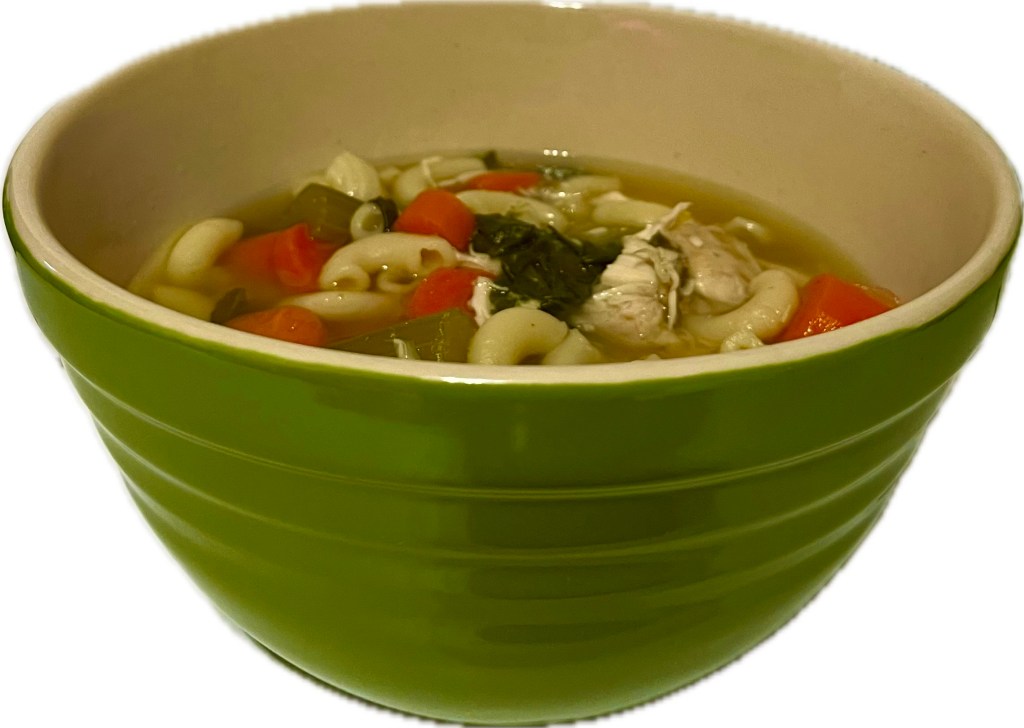
Whether you go it alone as I did this day or you make it a family project, I hope you have a good time making this tasty, filling soup!
 Rizzo's Rambles and Ruminations