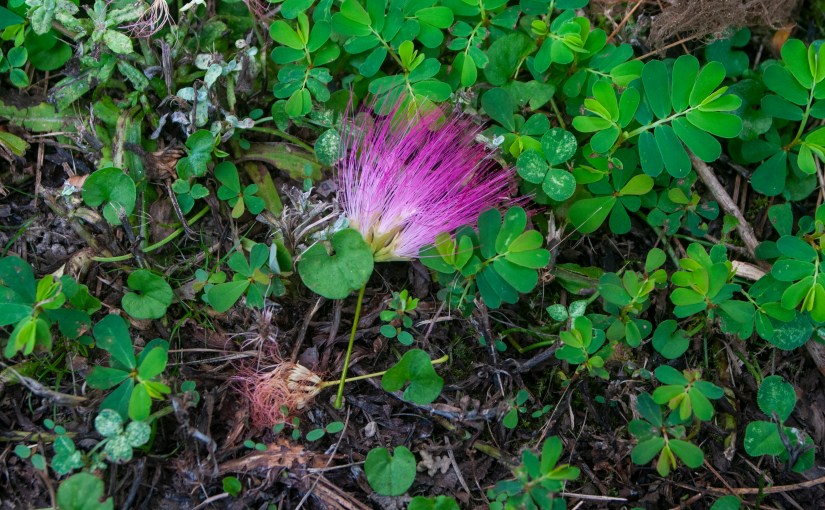
Mimosa Trees

(Photo Credit: Nick Rizzo, nickphotographics.myportfolio.com)

As told by my mother, Betty Burton Rizzo

My Uncle Edgar Morgan got hurt working in the coal mine. He was actually my father’s uncle, which made him my grand uncle. He and Aunt Martha lived in the town of West Jefferson. They had several daughters, Joy, Faye, Joanne, Marie, and Carol Jane. Marie was about my age. We were probably in the fourth grade when Uncle Edgar was hurt. He broke his back and was in the hospital for a long time. When he came home, he was confined to a hospital bed and wheelchair. 

I remember going to visit him after his accident. Of course, I had been around them before, but this was my first time to go to their house in West Jefferson. Along with me were my two baby brothers Floyd and Lloyd, my mama and my daddy, Granddaddy and Granny Burton, and my daddy’s younger sister Helen Burton. Uncle Edgar was Granny Burton’s brother. My granddaddy and granny didn’t have a car for a while, so my daddy drove them.  

That was the first time I or any of the rest of us, for that matter, had ever seen anything like the tree in their front yard. It was glorious. It was bushy. It had a base and then limbs branched out with these pretty pink fuzzy blooms on them. We had never seen anything like it! We all liked it. Aunt Martha said it was a mimosa tree. (I think it has a Japanese origin.) Granny was always getting cuttings off everything, so she and Mother got cuttings from the tree and rooted them. 

Mama set one out in the front yard. It grew and was so pretty. Then after a while, mimosa trees just sprouted up everywhere. They tried to trim them down. But they kept coming up and coming up. They tried to get rid of them but couldn’t get rid of them. They just kept getting in everywhere. 

Granny already had kudzu, another invasive plant from Asia, in her backyard that would start growing before the grass got high enough to be mowed. She also had a scuppernong vine that the kudzu would get intertwined with. Then she planted two mimosa trees in the backyard. The mimosa trees spread at my granny’s like they did at our house, so they came up in the scuppernong vine also. They tried to cut the kudzu and mimosa trees out of the scuppernong, but they could hardly cut anything without cutting the good scuppernong vine also. 

My daddy finally cut down the tree in our front yard. But that didn’t kill it. It kept sprouting from the stump. I especially remember how Mother fought the tree stump because it kept sprouting up again, so she kept trying to kill the stump with anything that she had that she could. Anything like hot grease or hot water or anything that had lye or something in it, she’d go out there and pour it on the stump. But it still just kept growing and growing and growing till finally she killed it enough to the point that they could take it out of the ground with a tractor. We didn’t have big equipment, just the little red and white Ford garden tractor. But Mother had finally managed to get it to the point they could pull the roots and everything out of the ground. But it took years to get it to that point.

Now almost eighty years later, mimosa trees grow all over this area. When we moved here, we moved into almost a wilderness area that had no mimosa trees. We lived in the woods like Little House on the Prairie, so I figure that it’s the cuttings Granny and Mother got from Aunt Martha that are responsible for all of these Mimosa trees around us.

I think there’s a spiritual lesson here. Sin may look beautiful at first. It’s enticing, so much so that you bring it home and make a place for it. You even cultivate it. But then when it starts to take root, it’s hard to get rid of it. And even if you do get your life right with God, what you bring into your life you also bring into your family. Just like the mimosa trees that are all over this area now, you could be letting something take root that will be a problem for your family for generations. So if you see a mimosa tree, leave it where it is. And when you’re tempted to bring sin into your life, no matter how appealing, leave it alone too!

NOT comma rules

First, let me begin by saying that even though I teach English, I do not judge people based on their speech. (I didn’t say I don’t judge; I just do not judge based on speech.) I honestly love to hear the different dialects of English, which can vary widely even within a small region. I make a point to tell my students that when they go home, they are not to correct their grandmothers. For putting up with them, Grandma (Granny, Nona, Yaya or whatever she goes by) has earned the right to say what she thinks however she wishes to say it. In fact, I sometimes use incorrect grammar depending on the context simply because it would sound odd and out of place to do otherwise. In other words, there is grocery store English, the English you use at Winn Dixie or Piggly Wiggly (yes, for those “not from around here,” those are real stores), and then there is job application English, or what we in the business call Formal Standard or Edited English.

And speaking of editing, one of the things I most often find in student papers is a complete and utter lack of understanding of comma use. I do not really know why since commas, just like periods, have rules about when and where they are placed. Yet, students (and my buddy Roger) struggle with commas.

I said I do not know why, but I think I actually do. Students simply do not learn the rules, or at least they do not learn all of them. Instead, they substitute their own willy-nilly rules. So here is my little diatribe about the three NOT comma rules that I have discovered students most often employ.

The emotional comma rule: 

Student: “I put a comma there because I felt like it needed one.”

Emotions are generally NOT what you want to use to make any decision. Think about the times in your life when you let your emotions decide for you. Yeah, there you go. So do not place a comma somewhere just because you feel like one is needed. 

The artistic comma rule: 

Student: “It just looks like it needs a comma there.”

Sorry, but your aesthetic choice for placement of commas is as flawed as the emotional commas. Looks, as the saying goes, can be deceiving. You cannot decide comma placement by looks. 

The respiratory comma: 

Student: “I put a comma there because I paused and took a breath.” 

While this looks like a rule and is related to a reading guideline, this is not how you place commas. Somewhere in your early academic journey, maybe second or third grade, your teacher was helping you learn how to read. Along the way, he or she began to coach you on how to read with feeling and cautioned you to slow down or pause at a comma. But just because you pause at a comma when reading is not the reason it was placed there. 

Let me draw an analogy for you. When you drive, you stop at stop signs (or at least you better). But, when you stop do you get out of your car and plant a stop sign in the parking lot, your driveway, etc.? Of course not. In the same way, while you might pause at a comma when reading, you do not put one where you pause when reading what you are writing. You might pause at a different spot than I would because your natural speech pattern is different than mine or maybe because I just climbed a flight of stairs. 

Beware of these three rules that are not really rules. Just like periods, commas have rules for their placement. After all, hardly anyone above the first or second grade just places a period where he or she feels like it. They use rules to place periods at the end of a sentence or with an abbreviation.

Just as periods show an end, in English commas generally separate or set off things. Depending on how you slice them, there are about ten comma rules, including using a comma to separate items in a series, using a comma to set off a noun of direct address, using a comma after an introductory element to separate it from the main clause, using commas to separate parts of an addresses or dates.

If you are interested in learning or at least looking at a list of comma rules, since I’m not going to list all of them, here is a source I direct my students to for all kinds of English grammar and writing help: https://owl.purdue.edu/ No, I do not get a royalty for sending you here. I am just doing my part to help you develop some “comma sense.” (Now that’s puny.)

Happy editing!

P.S. There’s a comma usage error in the blog. Did you catch it?